Part II · Chapter 12
Finding What to Sell
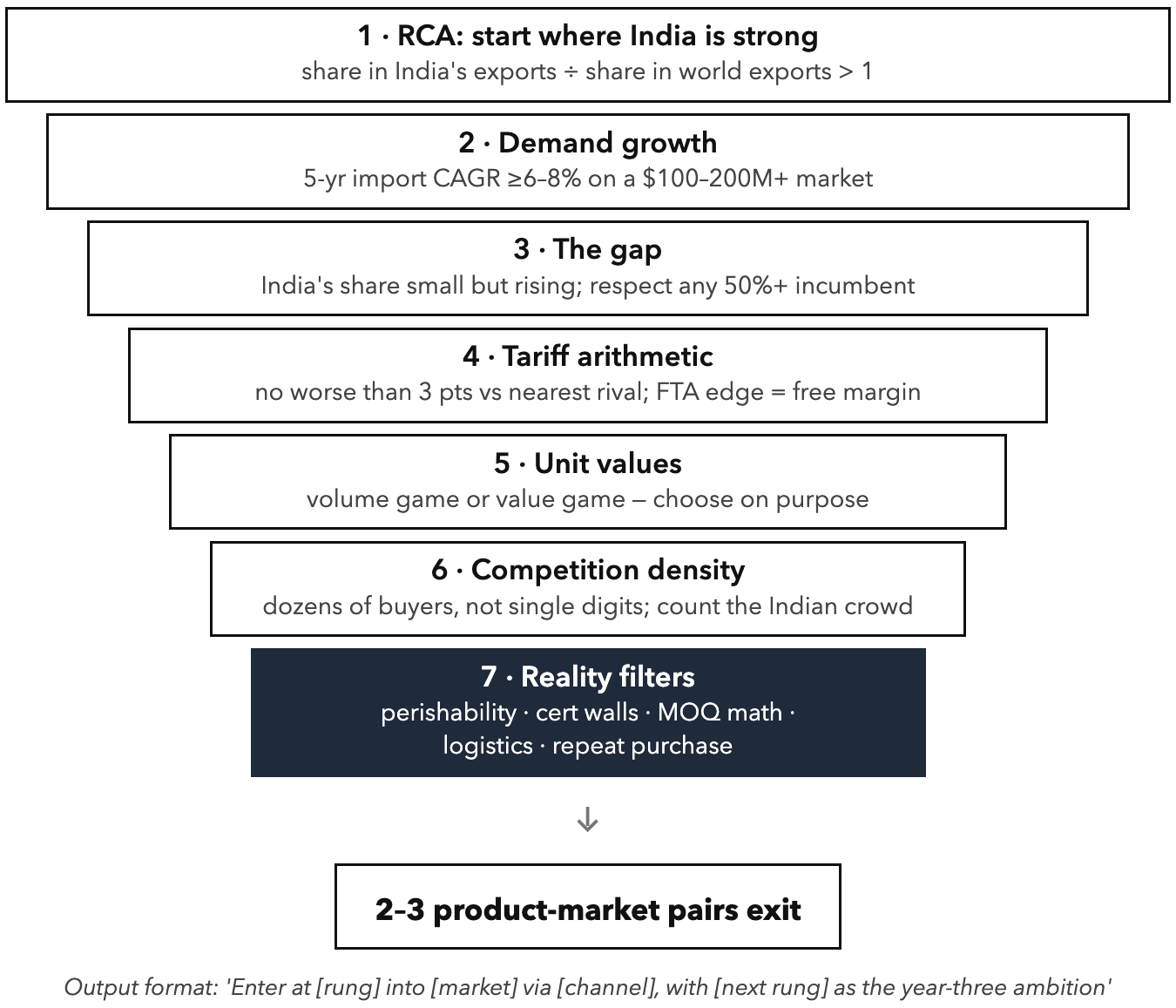
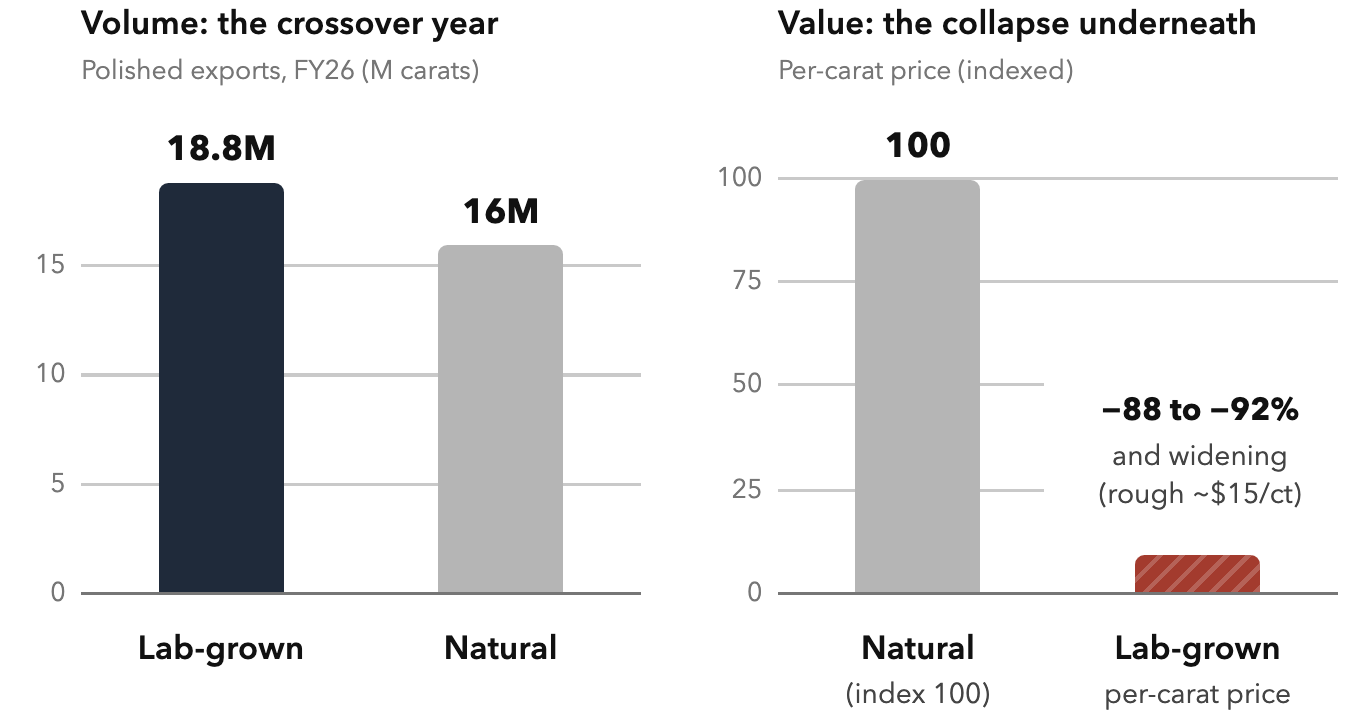
Which product should you export? Rather than naming one, this chapter answers with the method that finds products, for first-time exporters and for manufacturers wondering which of their lines could travel. It opens with lab-grown diamonds, a category whose shipments boomed while the price per stone fell away, to show why a product name is never a complete business decision. It then explains why raw commodity trading defeats most newcomers and sets out a seven-screen funnel built on public trade data that an idea must clear before it earns a sample. Turmeric is run through the whole funnel, from bulk rhizome to curcumin capsule. A final section tests quiet categories that may turn out to be openings or graveyards. Afterwards you can judge whether a product idea deserves real money before the first sample leaves your hands.
Key ideas
- The right rung for a newcomer is rarely the most valuable one: the bottom of the ladder is too crowded to defend and the top too costly to reach, which in turmeric's case leaves a middle rung as the realistic entry.
- The hazards that defeat commodity newcomers, from price-driven rejections to overnight export bans, weigh less on a product that has been graded, certified and branded.
- An empty category is a question rather than a prize, since an uncrowded market may be too small for large traders or may hide a wall that already sank earlier entrants.
Tools and templates
Opportunity Scorer
XLSX · 8 KB