Part II · Chapter 13
The Watchlist
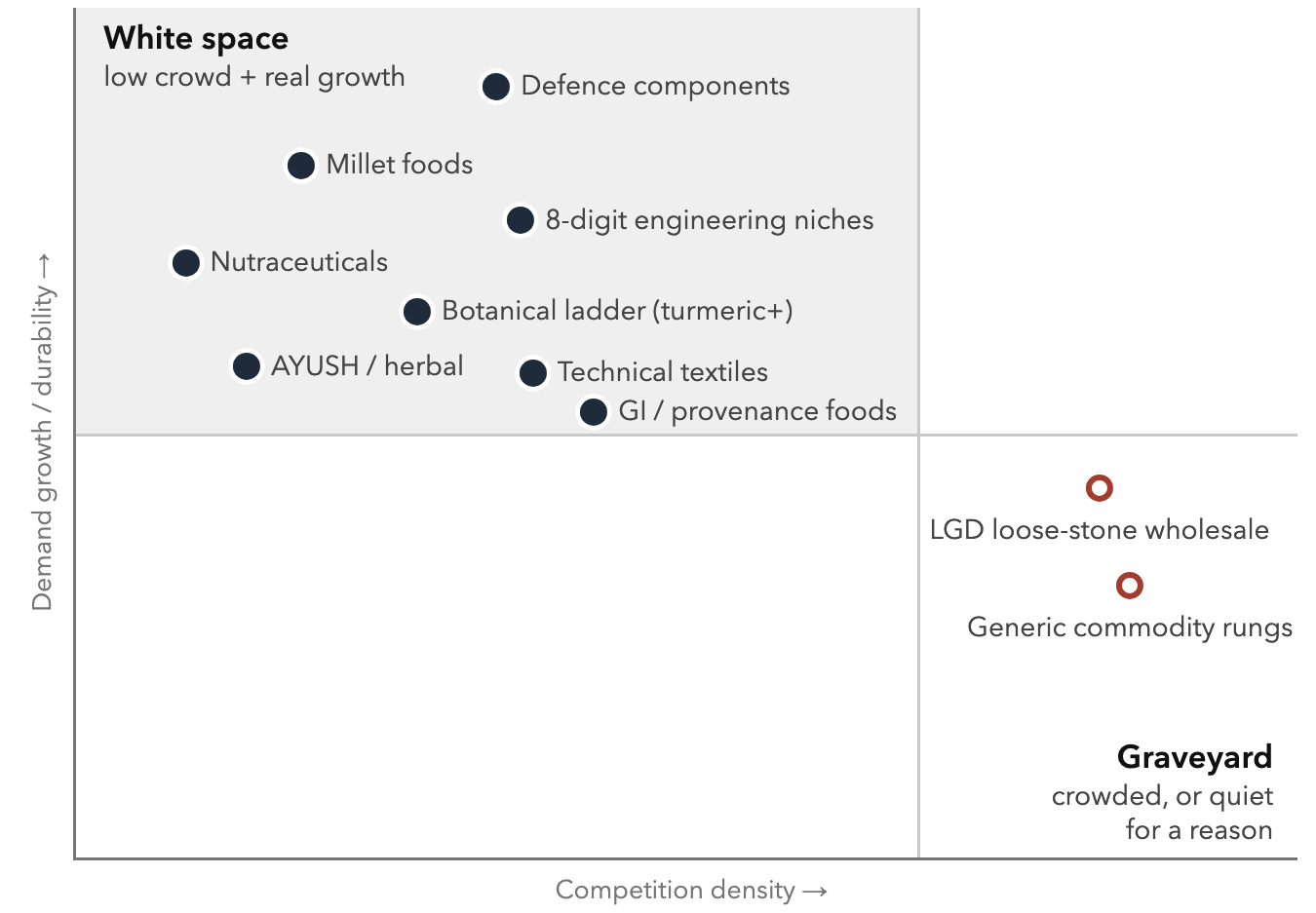
What does the product-finding method from the previous chapter turn up when it is pointed at real goods? This chapter is for founders who want to see that reasoning at work before trusting it with their own shortlist and for manufacturers seeking a second line. It opens with an obscure citrus from Mizoram that made the state India's fastest-growing exporter, then reviews the categories in which global buyers are trying out a second source beside China. A run of worked examples follows, from peanut butter and black turmeric to cow dung, egg powder, mahua, incense and human hair, each read for its value ladder and its barriers. A formula from Jaipur Rugs shows how a rare craft can turn a familiar everyday form into a premium export. A section on toys traces how tariffs, standards and enforcement turned an import market into an export one, and the chapter closes on a watchlist of categories worth tracking. Afterwards you can judge an unfamiliar product with the same reasoning, and tell a real opening from a passing one.
Key ideas
- The openings worth having show in growth data well before anyone writes them up as an opportunity.
- India's toy turnaround rested on a high tariff, a mandatory standard and real enforcement together, and it was contract work for global brands, not Indian labels, that carried most of the gain abroad.
- Incense has no entry barrier, so its one durable edge is identical output a billion times over, and its exports grow by matching form and scent to how each country uses the stick rather than by cheaper pricing.
Tools and templates
Opportunity Scorer
XLSX · 8 KB