Part III · Chapter 25
The Code and the Data
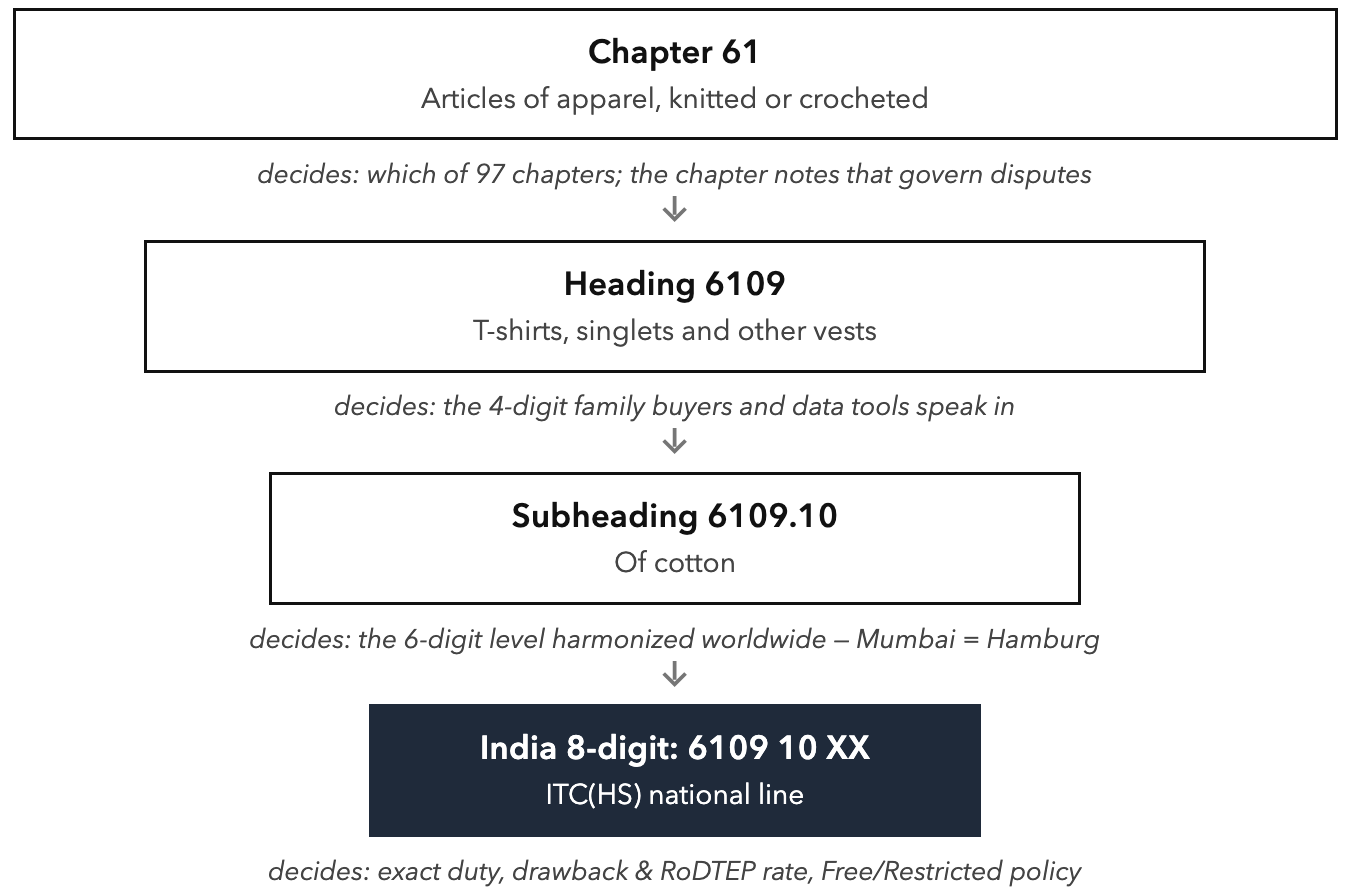
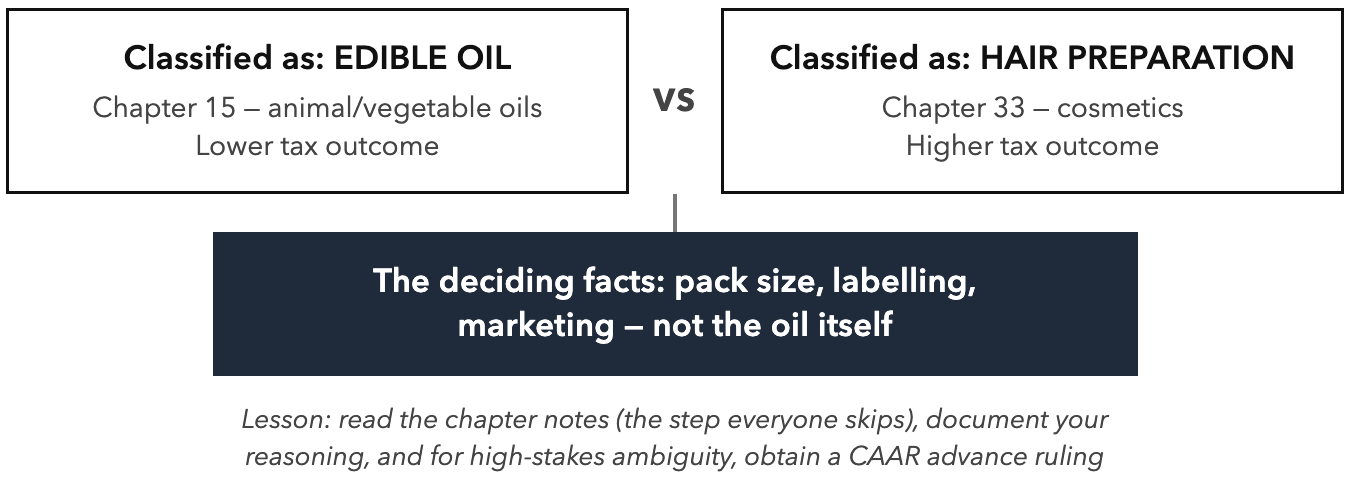
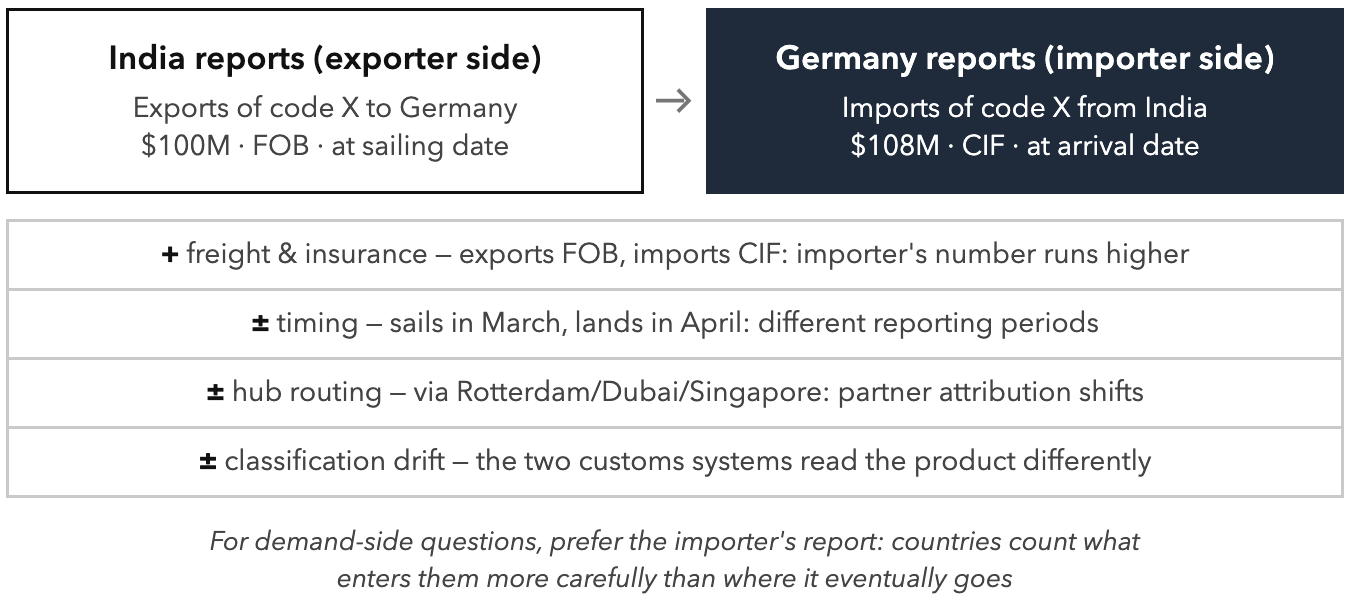
Before you price, ship or file anything, what exactly is your product in the eyes of customs, and what does the public record say about who trades it? This chapter opens the execution half of the book and is written for anyone with a product in mind who has never had to name it to a customs officer. A long tax dispute over coconut oil sold in small bottles shows that classification decides duty, incentives and clearance time. The chapter then explains how the Harmonised System narrows from broad chapters to India's own national lines, and sets out a professional method built on accuracy and written reasons rather than a hunt for the cheapest code. The second half turns to the trade-data tools now open to any exporter, explains why two countries' records of the same trade disagree, and matches each tool to the question it answers best. Afterwards you can describe your product the way the world's customs houses do, and test a market idea against evidence before you spend on it.
Key ideas
- A product's eight-digit code sits beneath almost every later decision, from duty and incentives to agreement schedules and market data, so a mistake there spreads through the whole business.
- Classification rewards accuracy over cleverness, because a code picked for its low duty must one day be defended, and only a documented reason can defend it.
- Two countries' records of the same trade never quite agree, since exports are counted at the port of loading and imports with freight and insurance added, so a figure is usable only once that gap is allowed for.