Part III · Chapter 26
Setting Up
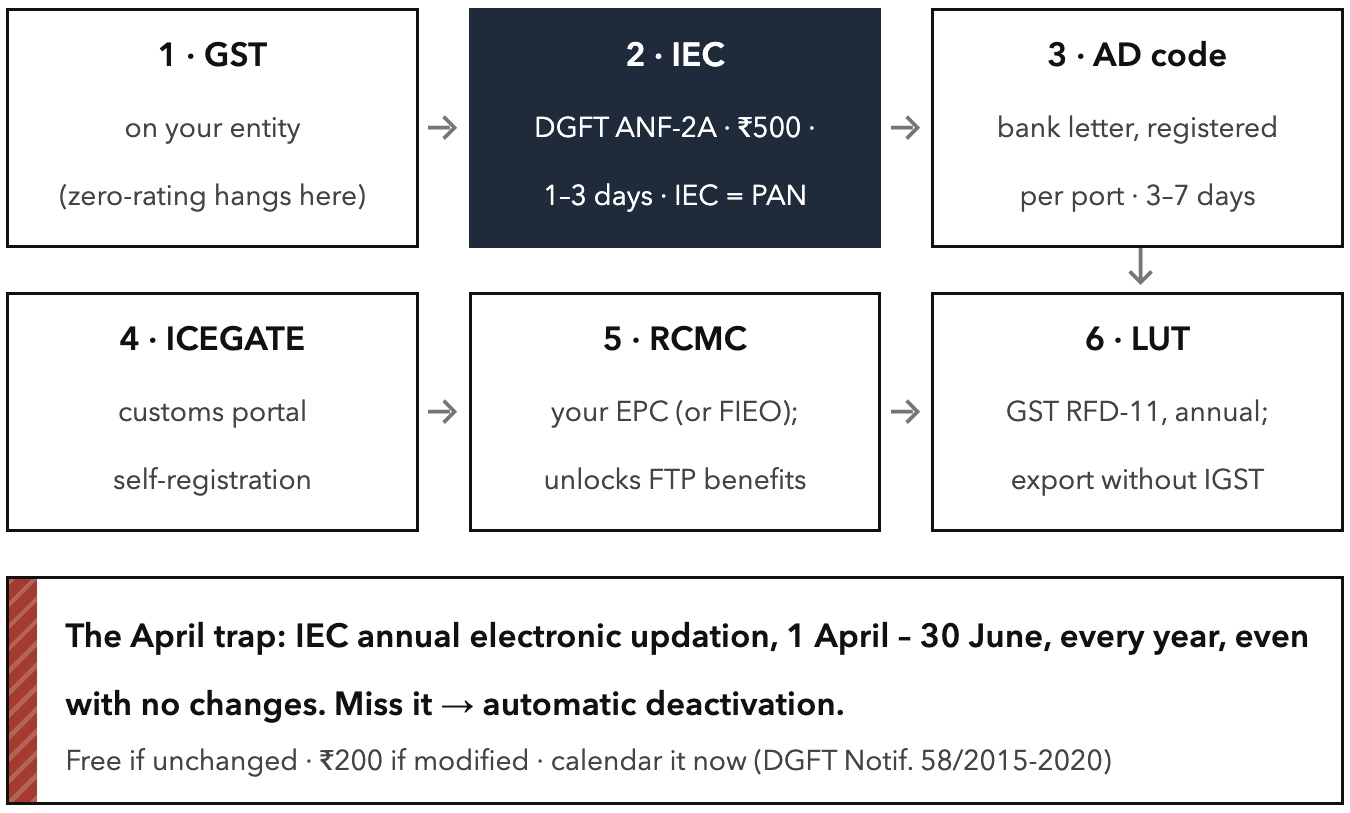
What does it take to become a business that can legally trade across borders, and what keeps it that way? This chapter is for first-time founders and for established firms adding exports, and it opens on an experienced textiles exporter whose next shipment stalls because a routine annual confirmation was missed. It separates two very different kinds of setup. One half is a brief, ordered set of national registrations, cheap and done within days, preceded by a choice of business structure that should grow with your buyers rather than ahead of them. The other half depends on the product: licences and certifications that can take months, with India's standards regime treated as a barrier that protects those who clear it. The chapter also weighs which certifications a destination truly requires, which a buyer merely asks for, and which industry memberships repay their fees. Afterwards you can tell how much of setting up is a fortnight of paperwork and how much is the real barrier between your product and its market.
Key ideas
- Compliance trouble in setup comes less from obtaining registrations than from keeping them alive, as a single missed annual confirmation can switch off a code that took only days to get.
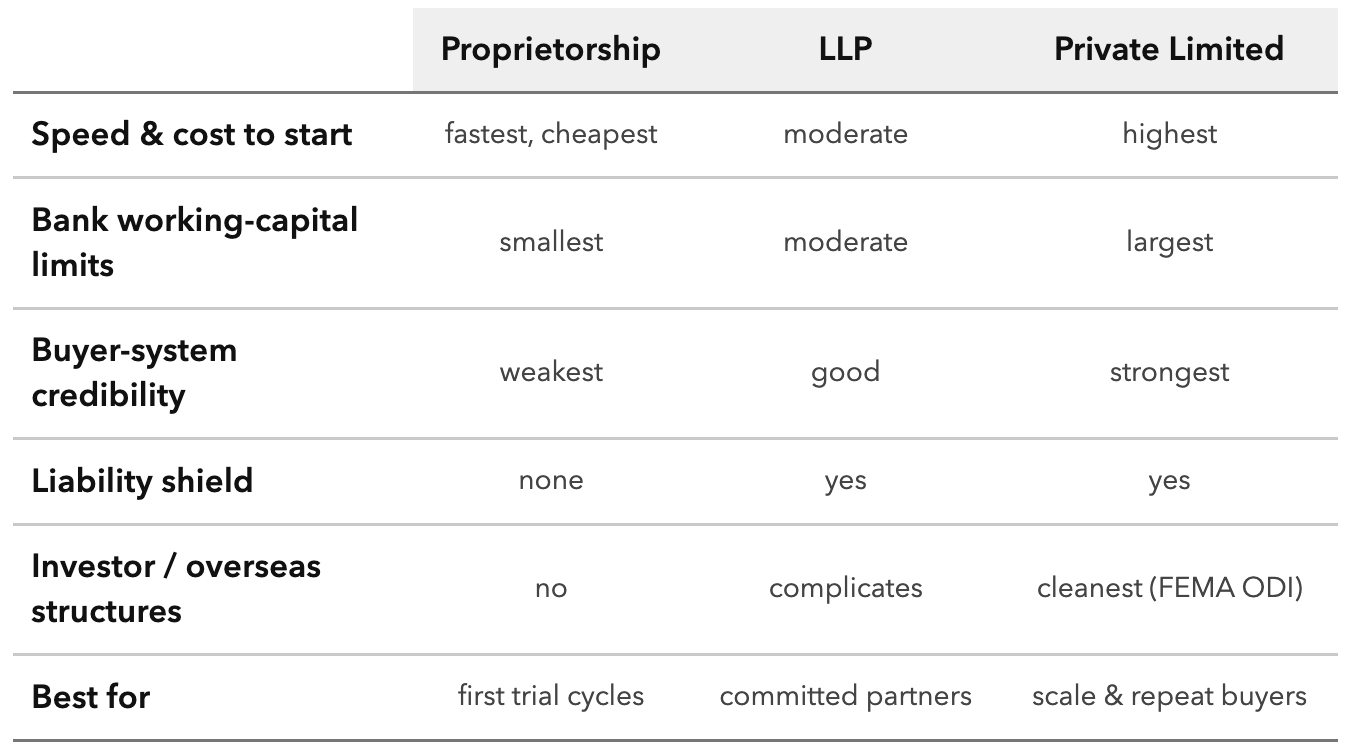
- The right legal form is the one the business has earned so far, and a company formed before any buyer returns is a cost carried for nobody.
- The slowest, costliest part of setting up is also the most defensible, since every month a licence takes keeps a less committed rival out of the category.