Part III · Chapter 24
Macro-Economics for Traders (Not Economists)
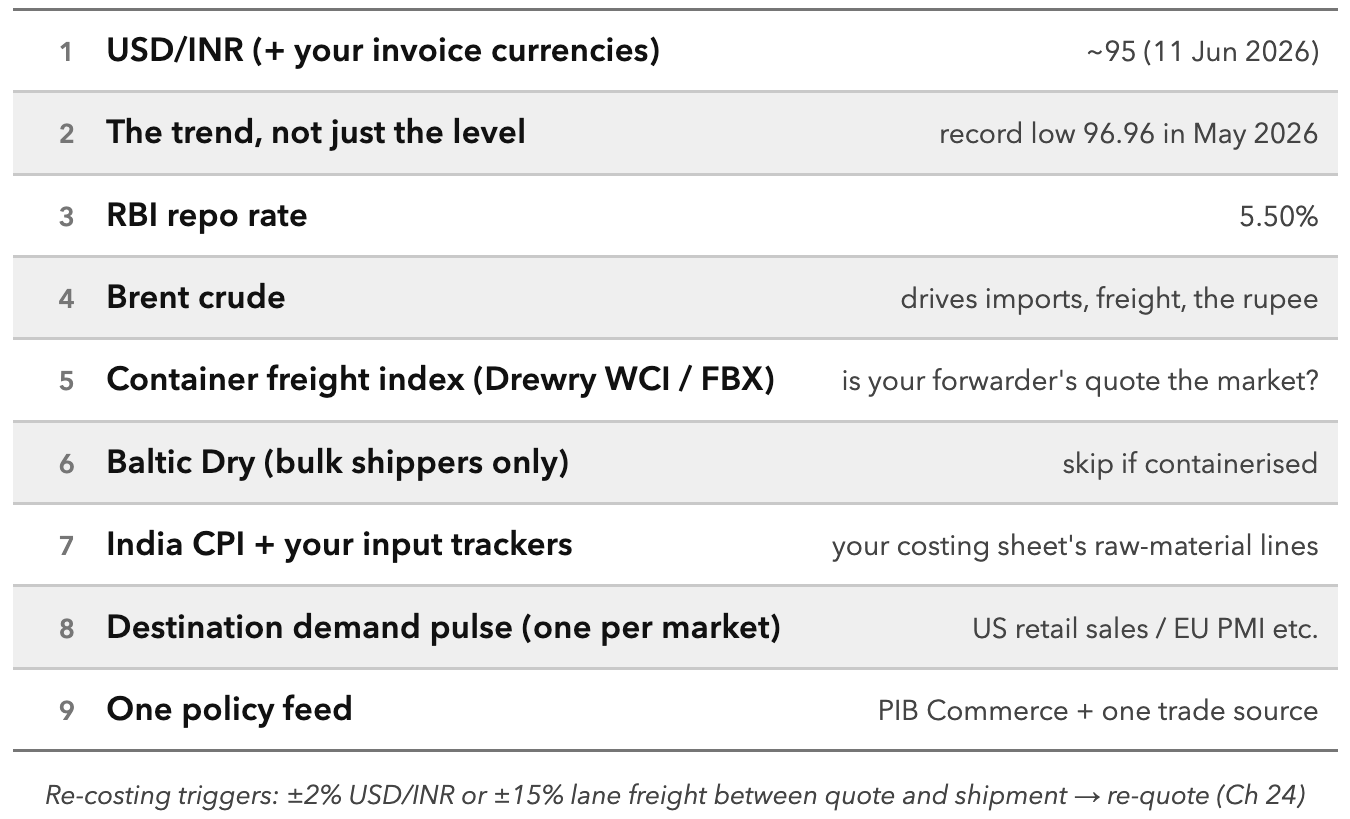
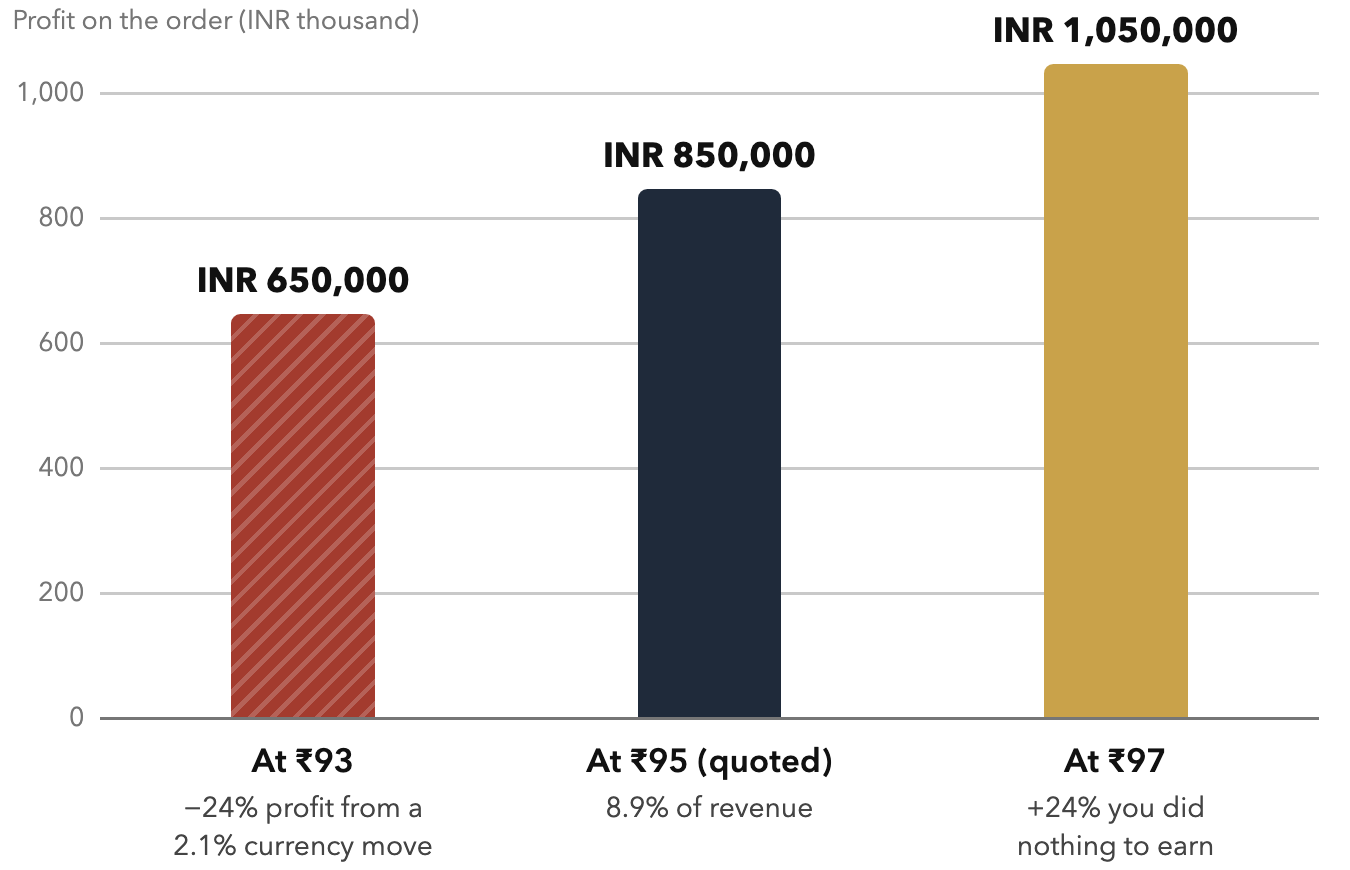
Which economic numbers actually move a trader's profit, and how closely does a small business need to follow them? This chapter is for exporters and importers who have never needed an economics degree and do not need one now. Its opening case is a Coimbatore manufacturer who priced a German order with care and still watched most of its profit vanish, because the euro slipped while her goods were at sea. Its lesson is that a trader reads the economy through his own order book, not the evening news. Rather than teach theory, the chapter keeps a handful of indicators in view and asks of each what it does to a single order: the rupee to the price you realise, interest rates to the cost of waiting for payment, freight to the most volatile line in a quote. It is sceptical of the cheer that greets a weaker rupee, whose gain is smaller and shorter than it looks. Afterwards you can judge what a move in currency, rates or freight means for your own margin before you quote.
Key ideas
- Economic news has no fixed sign for a trader: its effect has to be traced through one order's price, inputs and payment wait before it can be called good or bad.
- Interest rates and freight work on a trader through time, setting what it costs to wait for payment and how long any quote stays true.
- A weaker rupee's gift is worn down by imported inputs, by buyers who ask for it back, and by competitors whose currencies fell too.
Tools and templates
Cartel Costing Sheet
XLSX · 8 KB
Monday Dashboard
XLSX · 8 KB