Part I · Chapter 8
The United Kingdom & the European Union
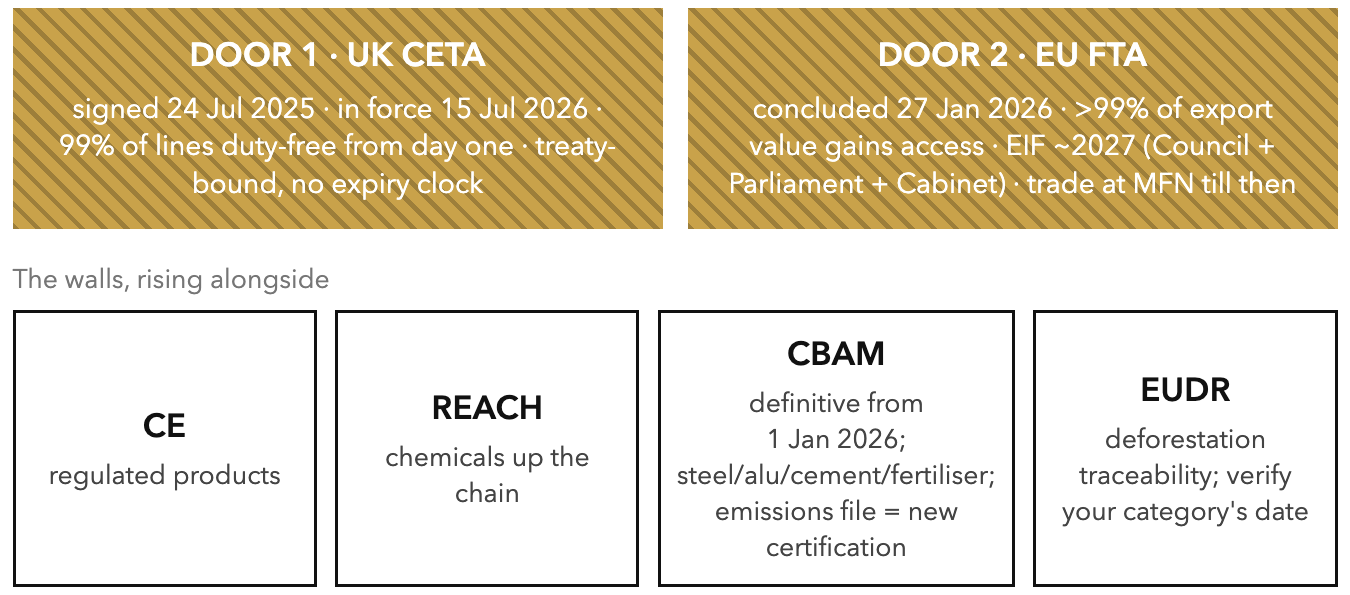
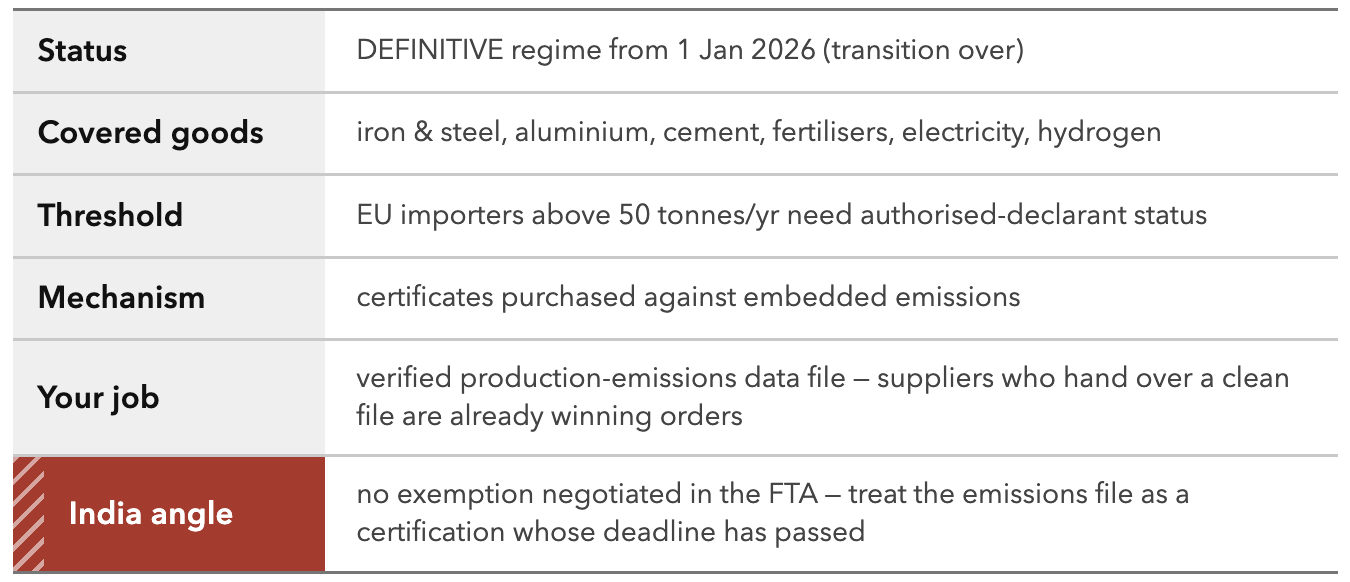
With India's British agreement applying since July 2026 and the European one, concluded in January 2026, due to take effect around 2027, how should an Indian business prepare for Europe's best-paying and most demanding buyers? This chapter is for exporters of textiles, leather, food, engineered goods and services who want to be an approved supplier before the tariff cuts draw a crowd. It compares the two agreements, shows which rivals lose ground under the British deal, and sets out the barriers that matter more than duty: product safety marks, chemical registration, the carbon border charge, deforestation tracing and Britain's own food controls. It looks at the premium end of the British food shelf, treats the Nordic countries as a market for green technology and IT delivery, and explains how buying a lapsed British brand out of insolvency can bring trust ready-made. Afterwards you can judge whether your business should earn European trust through certification or acquire it, and how early to begin.
Key ideas
- In Europe a contamination problem traced to some Indian suppliers can turn occasional testing into expected testing for every shipper of the product, and from then on the market stays open only to those who can prove each batch clean.
- The choice of Nordic country for an Indian entity carries more weight than it seems, because the five sit under two different trade agreements and differ sharply in how easily a foreign founder can bank and register.
- Britain's zero tariff makes a lapsed British brand worth more to an Indian owner, since a name bought out of insolvency can now be made in India and sold back duty-free, provided the deal takes its assets rather than its shares.