Part I · Chapter 3
Reading the Global Board
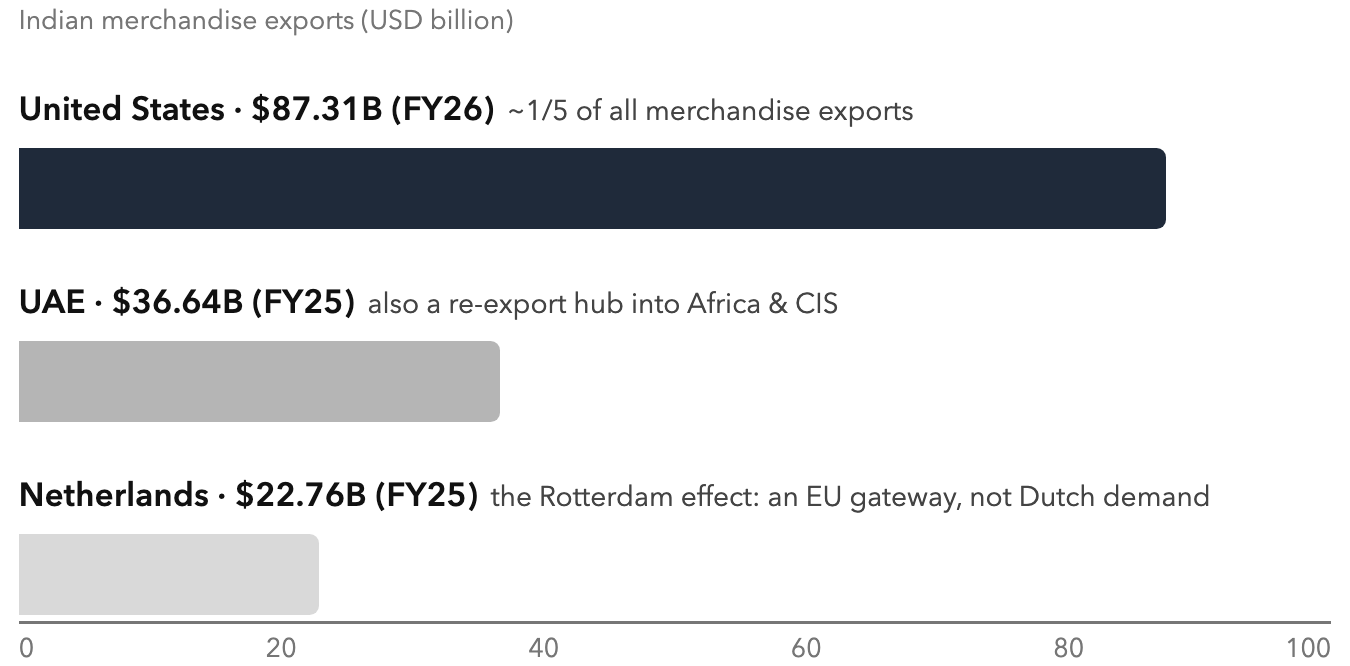
Who buys from India, and how should a trader read the world map before choosing where to sell? This chapter is for anyone whose export plan still points at a broad patch of the map. It shows why Europe, the Gulf and Africa each hide several markets with their own rules, buyers and payment habits, and why trade statistics can mislead when a port only passes goods onward. It sets out India's leading destinations, explains how the newest trade agreements reward exporters who build buyer relationships before the lower duty arrives, and previews the eight regions covered in the rest of Part I. It also shows how to read any trade agreement for a single product. The closing section draws on recent tariff swings and the 2026 shipping disruption in the Gulf to argue that concentration in one country or one route is fragile. Afterwards you can read a trade statistic or a trade agreement with a sceptical eye and count geopolitical risk among the costs of a market from the start.
Key ideas
- A market plan that names a region has not yet chosen a market, because rules, buyers and payment habits change at each border.
- A country's rank in India's export tables can reflect its ports rather than its shoppers, so the headline buyer list needs reading before it guides a market choice.
- Leaning on one country or one sea lane is fragile, and a spare of each costs far less than the shock it absorbs.