Part I · Chapter 7
US and Canada
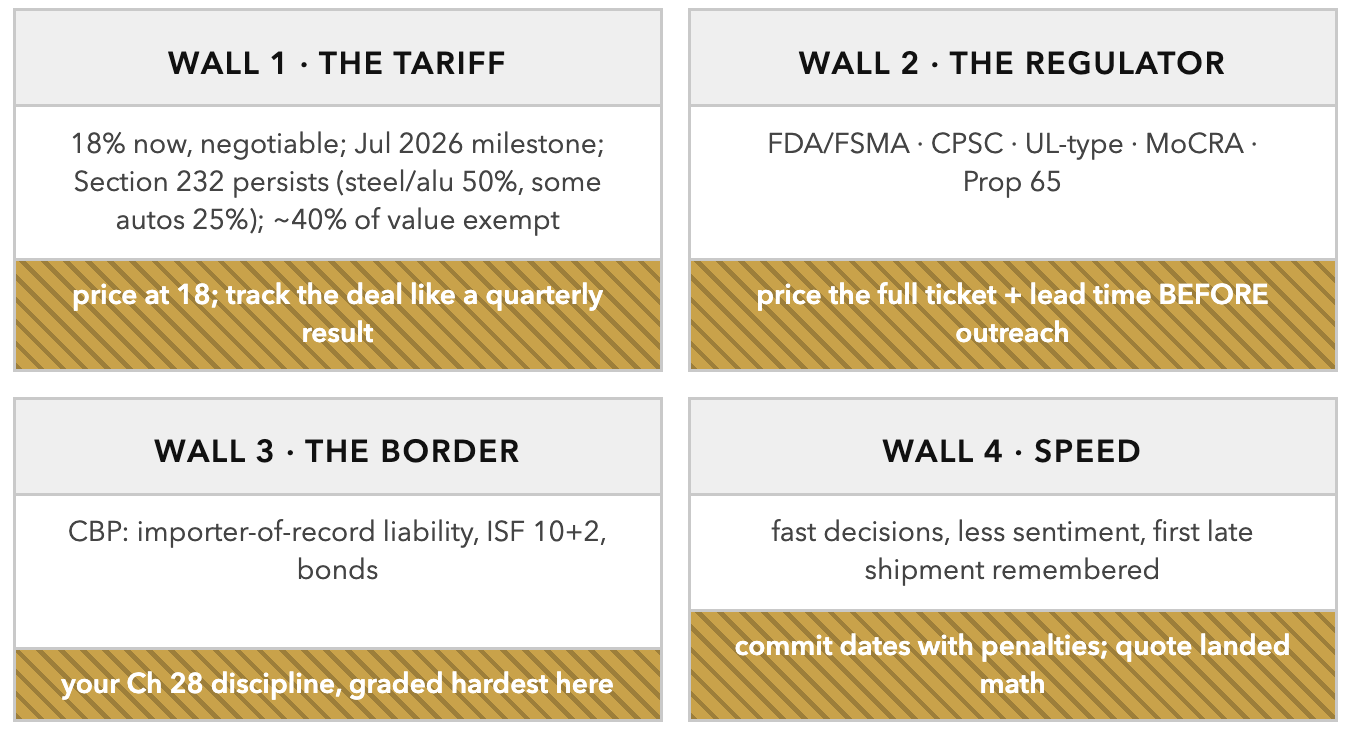
How does an Indian exporter win and keep American buyers through a stretch of constantly shifting tariffs, and why does Canada need a plan of its own? This chapter is for exporters of food, wellness, consumer and engineered goods who want a place in North America that outlasts the next policy change. It argues that what protects a supplier in the United States is how hard it is to replace, and it sets out four obstacles to clear: the tariff, the product's regulator, the border's data and liability rules, and the speed American buyers expect. It explains why the importer asks for so much paperwork, walks through what a warehouse club demands of a vendor, and shows how the same Indian raw material can be sold as a commodity or as a branded product. The Canada section covers bilingual packs, provincial rules, the long wellness licence and the grocery route to shelf. Afterwards you can judge whether your product can earn a lasting place in North America on something other than price.
Key ideas
- America's tariff year sorted Indian exports by how hard each was to requalify: medicines, cut stones and engineered parts held their buyers, while commodity apparel took the blow.
- Canada is a separate market rather than an annex of the American one, slower to commit than its neighbour but steadier once it does, so relationships built now at full duty can make an exporter the incumbent when the agreement lands.
- The biggest American retailers are open to an Indian supplier on stated terms, but a single club listing is a standing order of such size that the way in runs through a broker, a distributor and a factory audit.