Part III · Chapter 30
Structuring for Scale
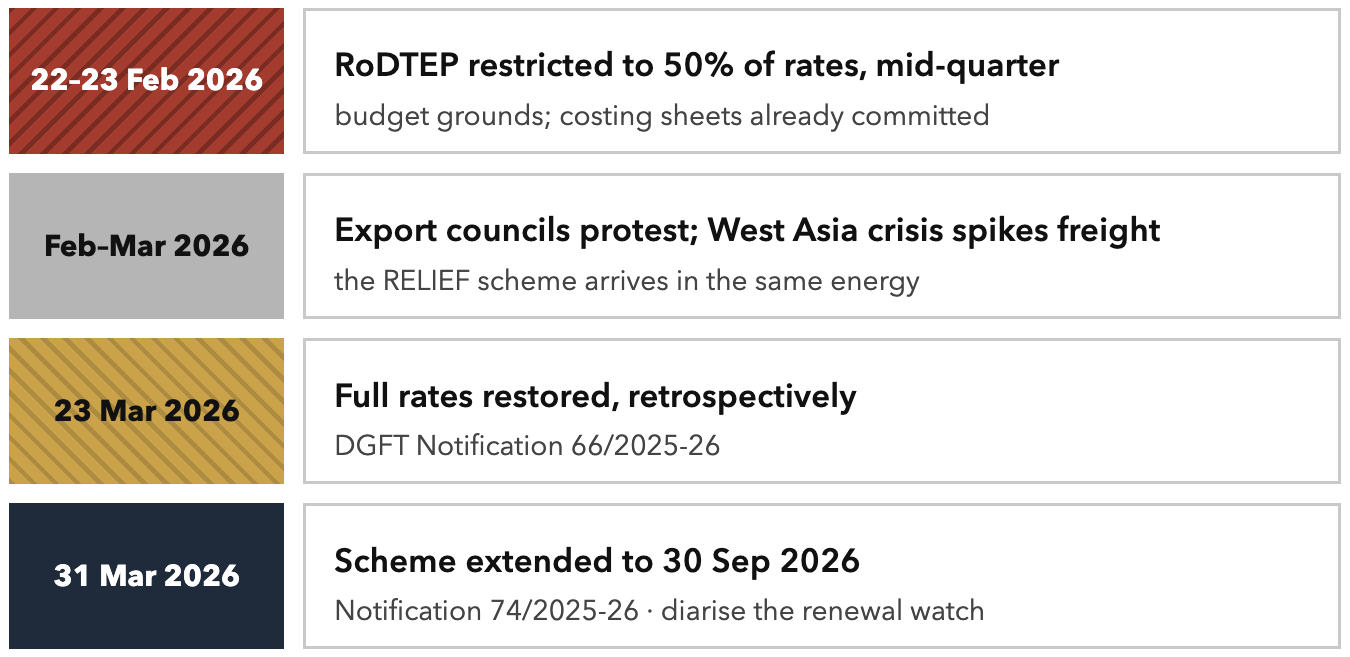
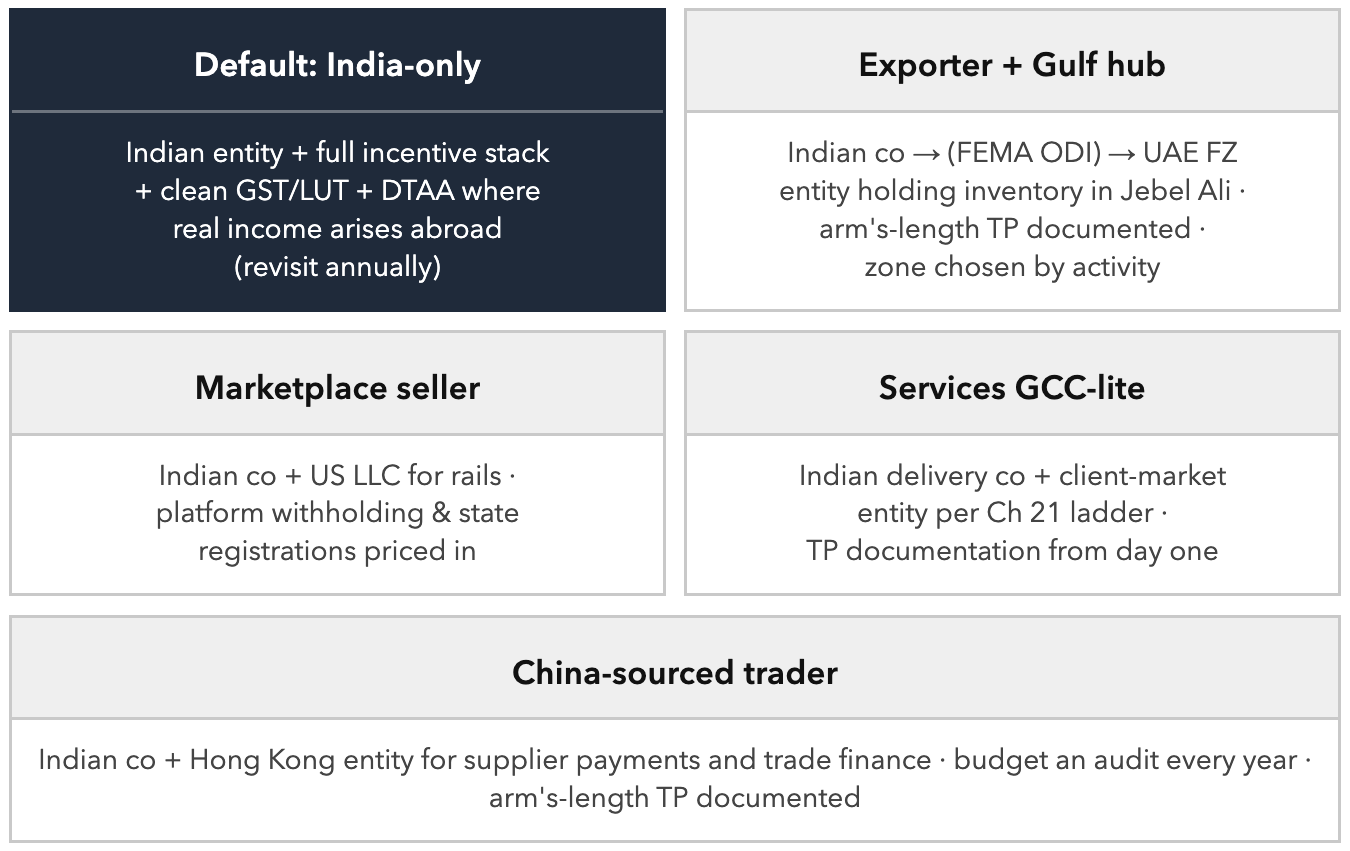
When does a company abroad genuinely help an Indian trader, and is the business at home claiming all the support it is entitled to? This chapter is for exporters a few profitable shipments in, who are hearing that serious traders run everything through Dubai, and for any exporter who suspects money is being left on the table at home. Written from a chartered accountant's desk, it argues that an entity abroad is justified by the work it does there, not by the tax it promises to save, and it profiles the main destinations by the kind of company each suits, drawing on a practitioner who sets up entities in several of them. It then sets out the Indian tax and exchange rules that turn a letterbox company into a liability. The second half moves to export incentives, opening on an early 2026 episode in which payments were cut mid-quarter and later restored, and walks through the main schemes and why claims fail. Afterwards you can build the most profitable structure your business can legitimately defend.
Key ideas
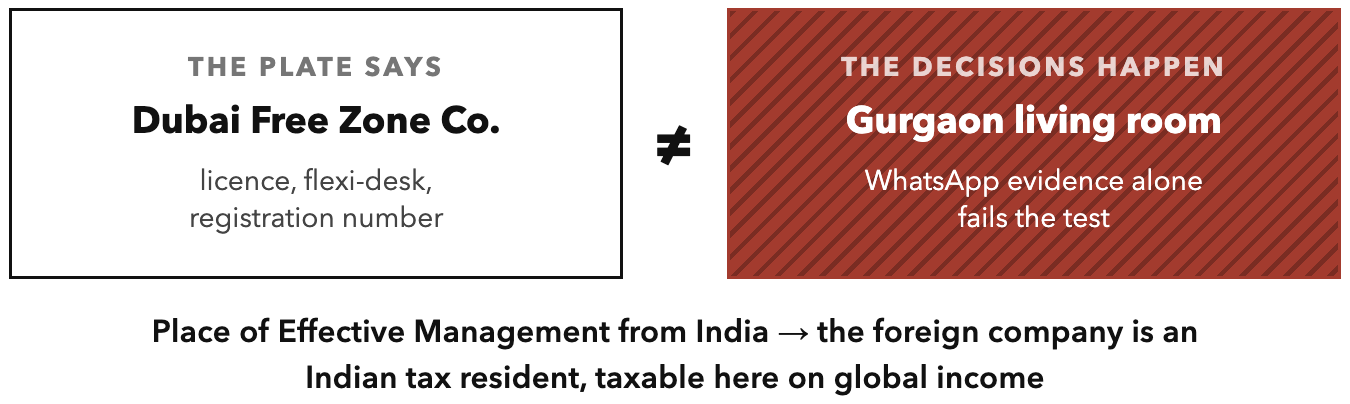
- Moving profit offshore does not take it out of India's tax net while the owner runs things from home, because the test looks at where decisions are taken rather than where a company is registered.
- Where to incorporate abroad is an operating decision, since each jurisdiction is built for a different kind of company, not a choice of prestige address.
- Incentive income is both fragile and neglected: policy can trim it mid-quarter, yet much of what exporters forgo is lost to unclosed paperwork rather than to the state.
Tools and templates
Cartel Costing Sheet
XLSX · 8 KB
Scheme Selector
XLSX · 8 KB