Part III · Chapter 31
The Grey Zone
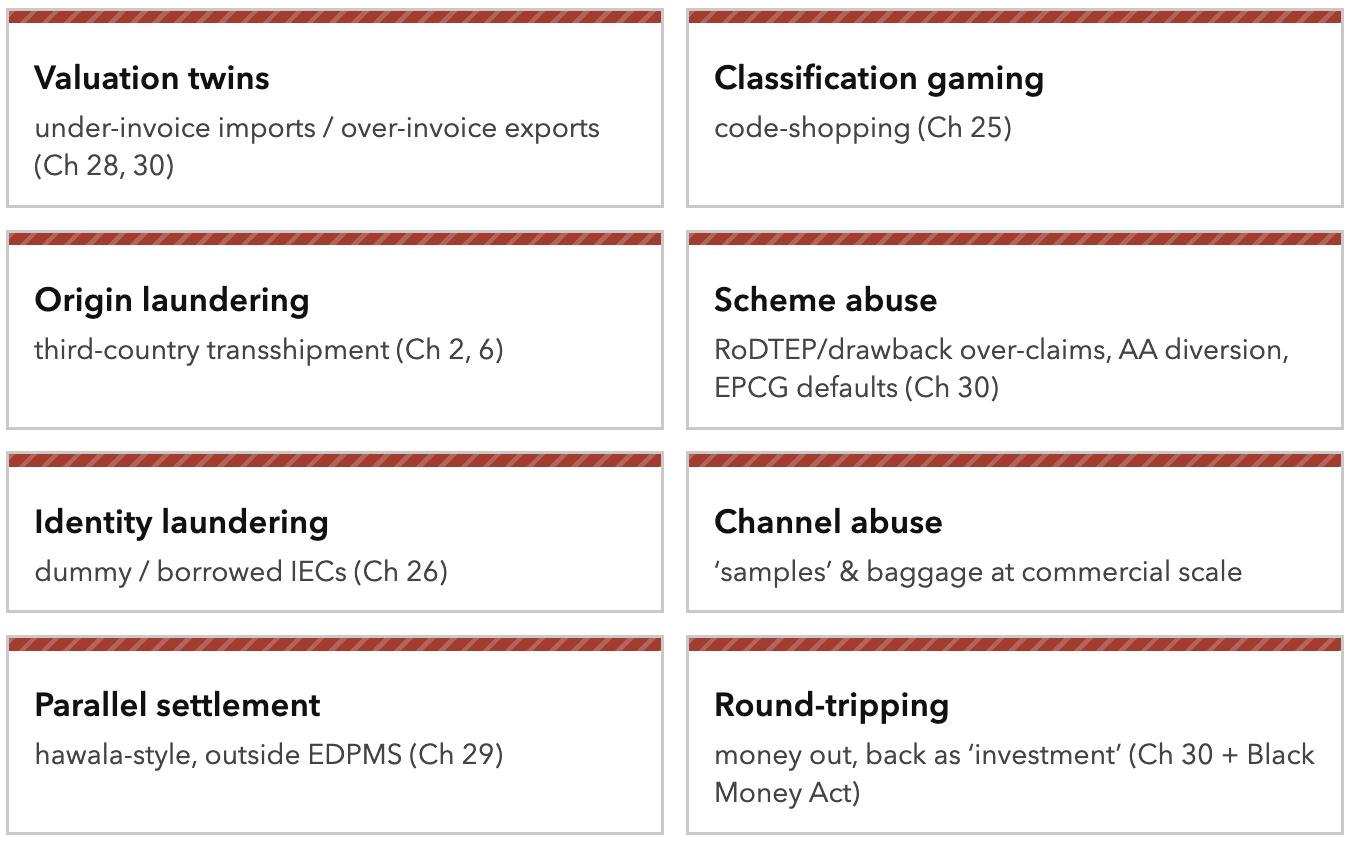
Why do some traders seem to operate on cheaper terms than everyone else, and what eventually happens to them? This chapter is for every trader who will one day be offered a shortcut, often by someone presenting it as expertise. Its stance is defensive: each pattern is explained only far enough for a buyer, banker or honest operator to spot it, along with why it tempts and what follows when it is found. The chapter argues that detection now rests on connected records on both sides of the border, and it sets the penalties beside the savings to show why the expected return turns negative over time. It closes on the lawful routes that answer the same pressures the schemes exploit. Afterwards you can recognise a shortcut for what it is and weigh its true cost before anyone asks you to sign.
Key ideas
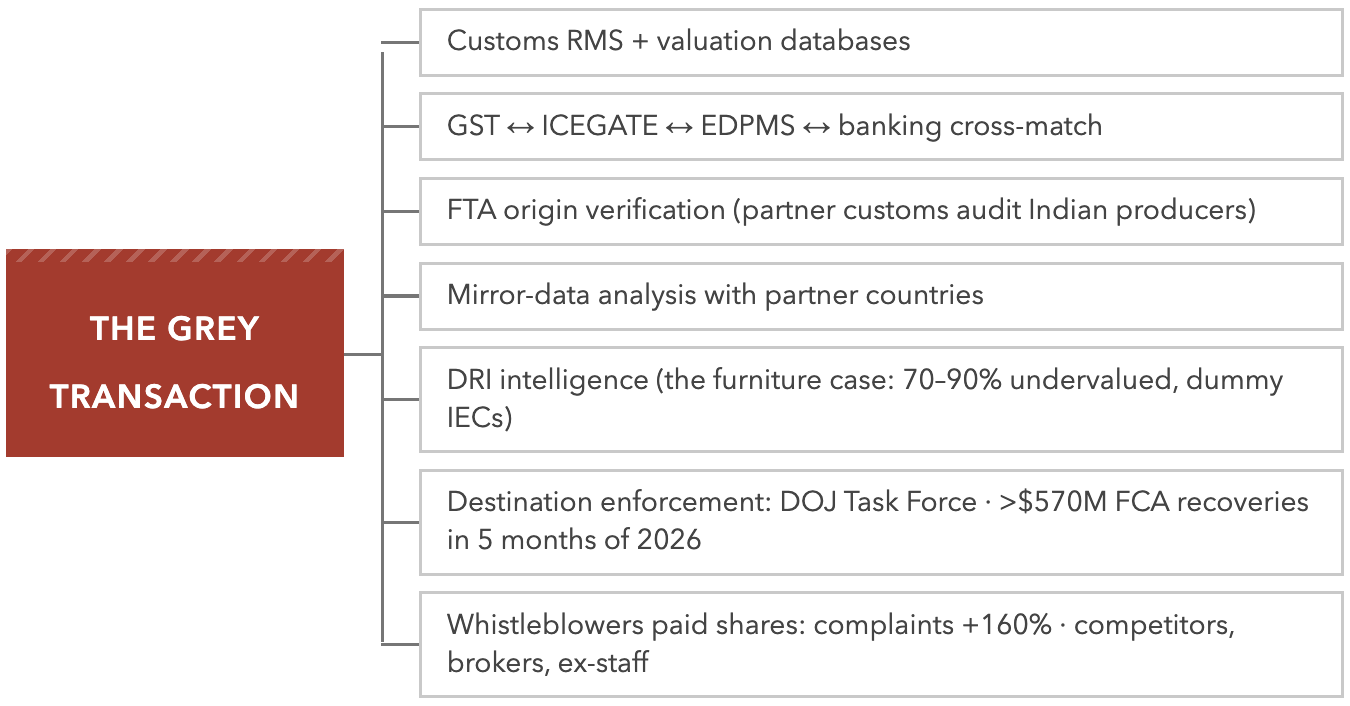
- Evasion is now caught by cross-matched records rather than alert inspectors, so a scheme grows riskier with every system it touches.
- The saving from a shortcut is small and arrives every shipment, while its cost arrives late, all at once and for the whole history, which is why the honest route wins over any scheme that runs for years.
- Detection no longer stops at India's border: destination customs now hunt the same schemes, and in the United States even rivals and former staff are paid to report them.