Part III · Chapter 29
Getting Paid
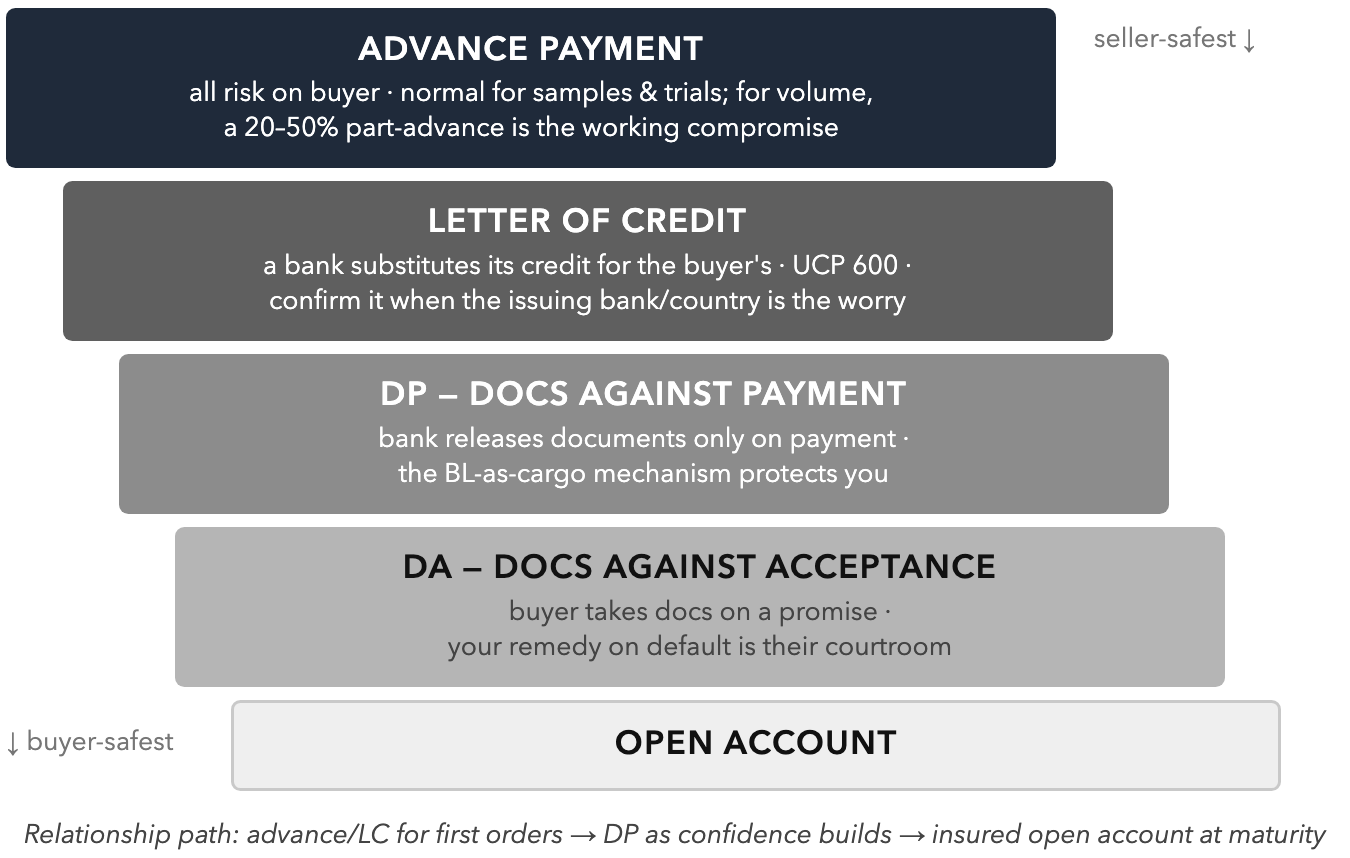
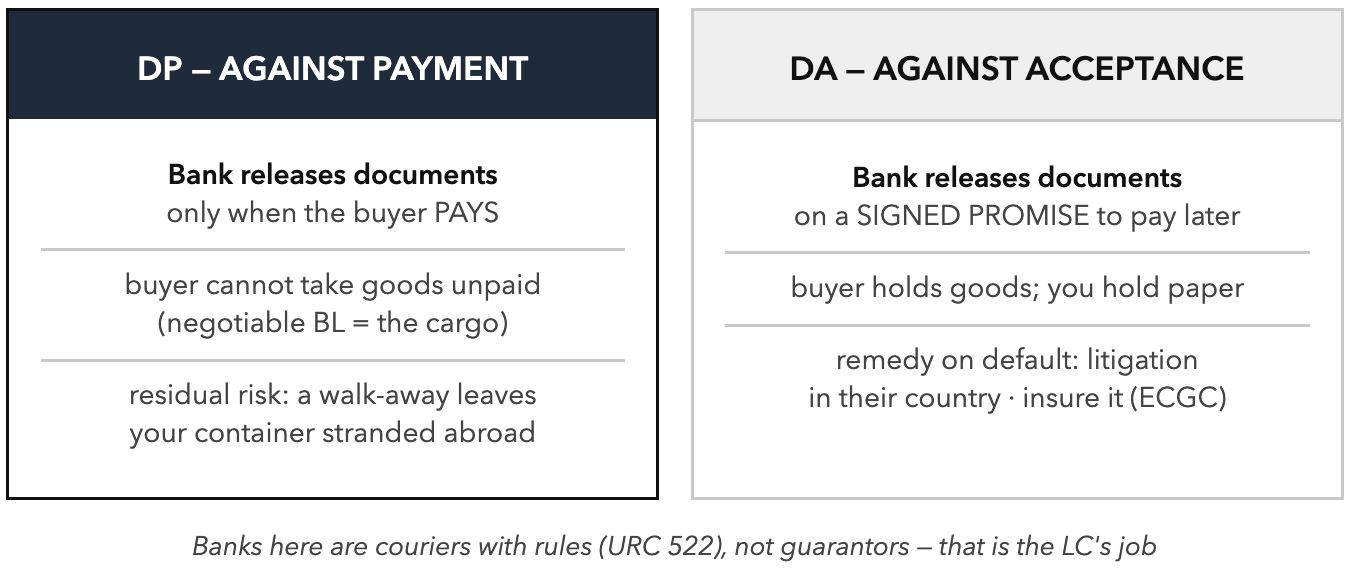
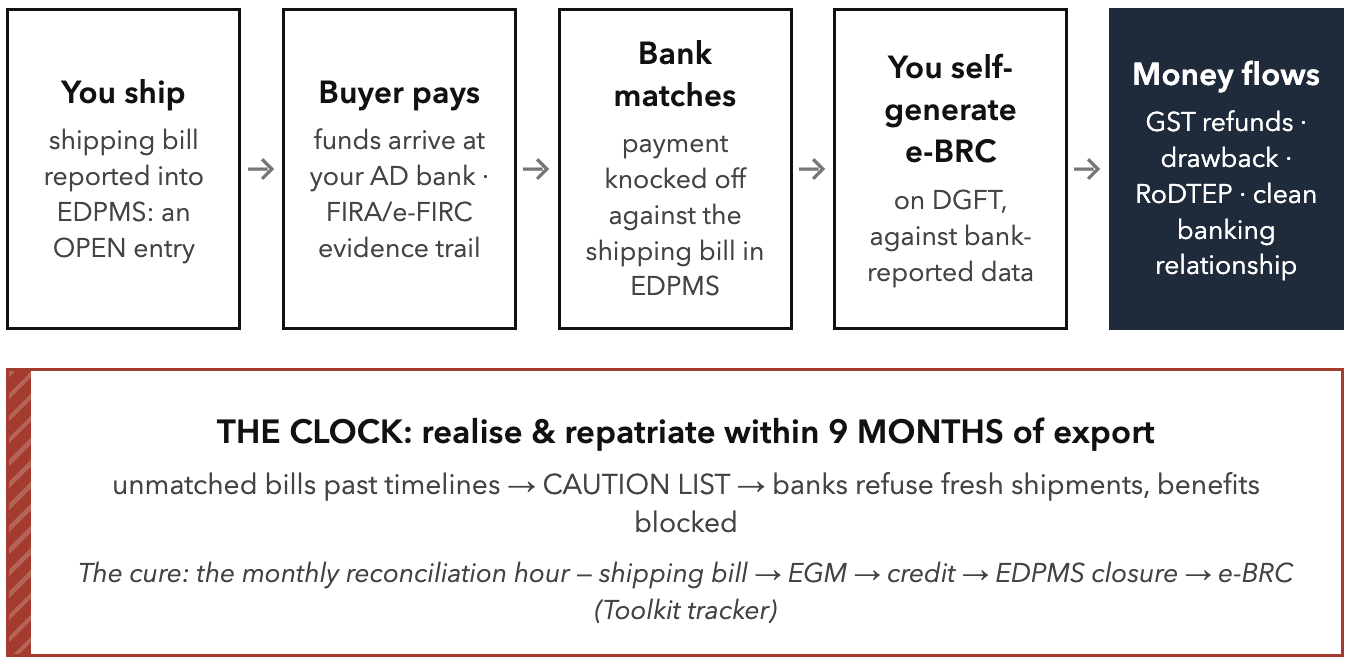
Once the goods have left, what makes a buyer you have never met pay, and how much of the money survives the trip home? This chapter is for exporters setting payment terms for the first time and for traders whose margins leak between shipment and receipt. It picks up the damaged New York container left unresolved in Chapter 27 and argues that every payment method answers a single question about who must trust whom first. From there it follows three separate ways an earned margin can go missing: a buyer who never becomes obliged to pay, money that arrives but is never formally matched to its shipment in India's banking records, and the months between spending and collecting, when interest, default and currency each take a share. Letters of credit receive close attention, since most first presentations fail on clerical detail rather than fraud. Afterwards you can ship to a stranger abroad and say which risk each of your safeguards is there to cover.
Key ideas
- Every payment method is a bet on trust, and the sensible bet changes with both the age of the relationship and the country the buyer sits in.
- The state pays an exporter only for shipments its banking records show as settled, so careless reconciliation can cost the refunds and incentives that make a thin margin work.
- Export credit insurance is as much a source of information as of protection, since the limit an insurer sets on a buyer shows what it believes he can pay.
Tools and templates
LC Checklist
XLSX · 7 KB
Scheme Selector
XLSX · 8 KB