Part II · Chapter 17
Costing, Margins & Unit Economics
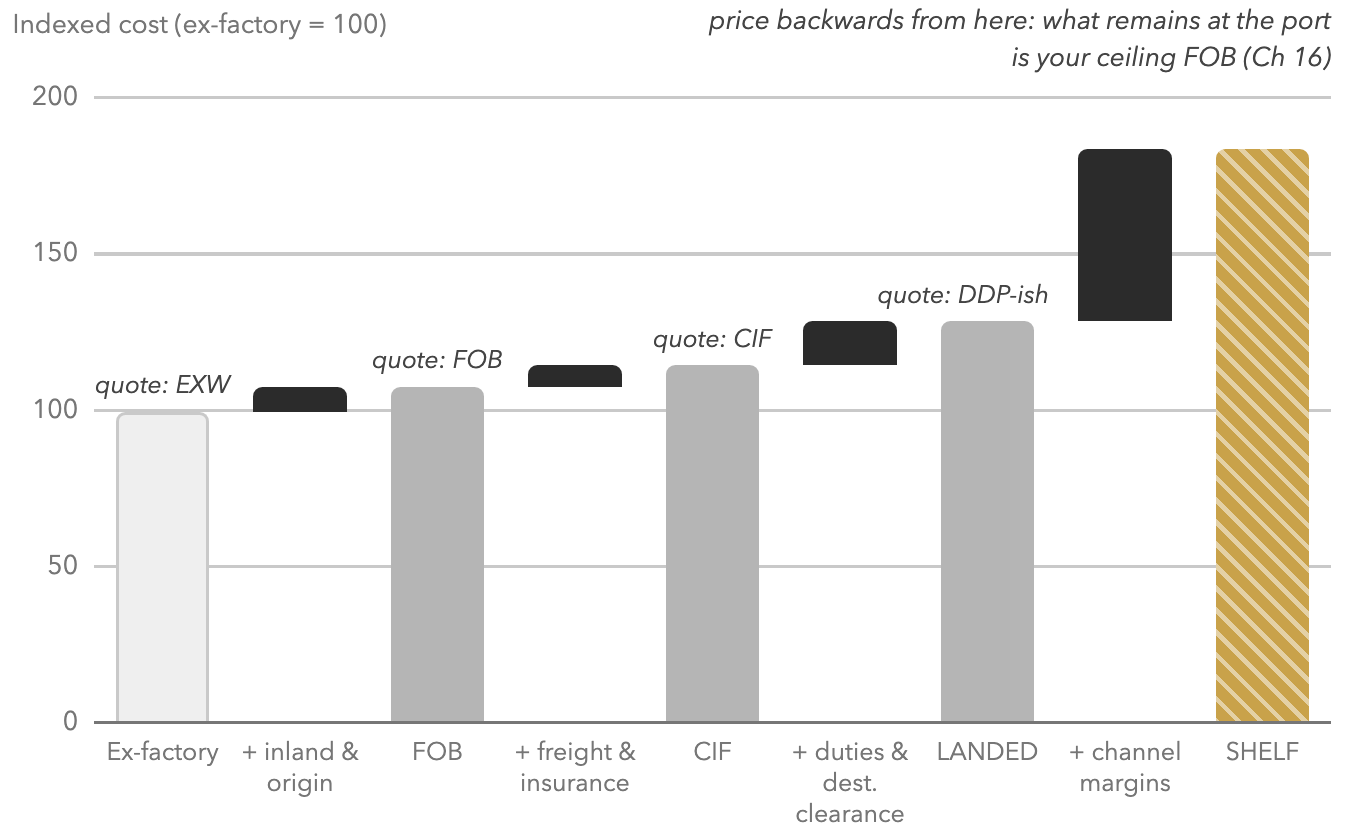
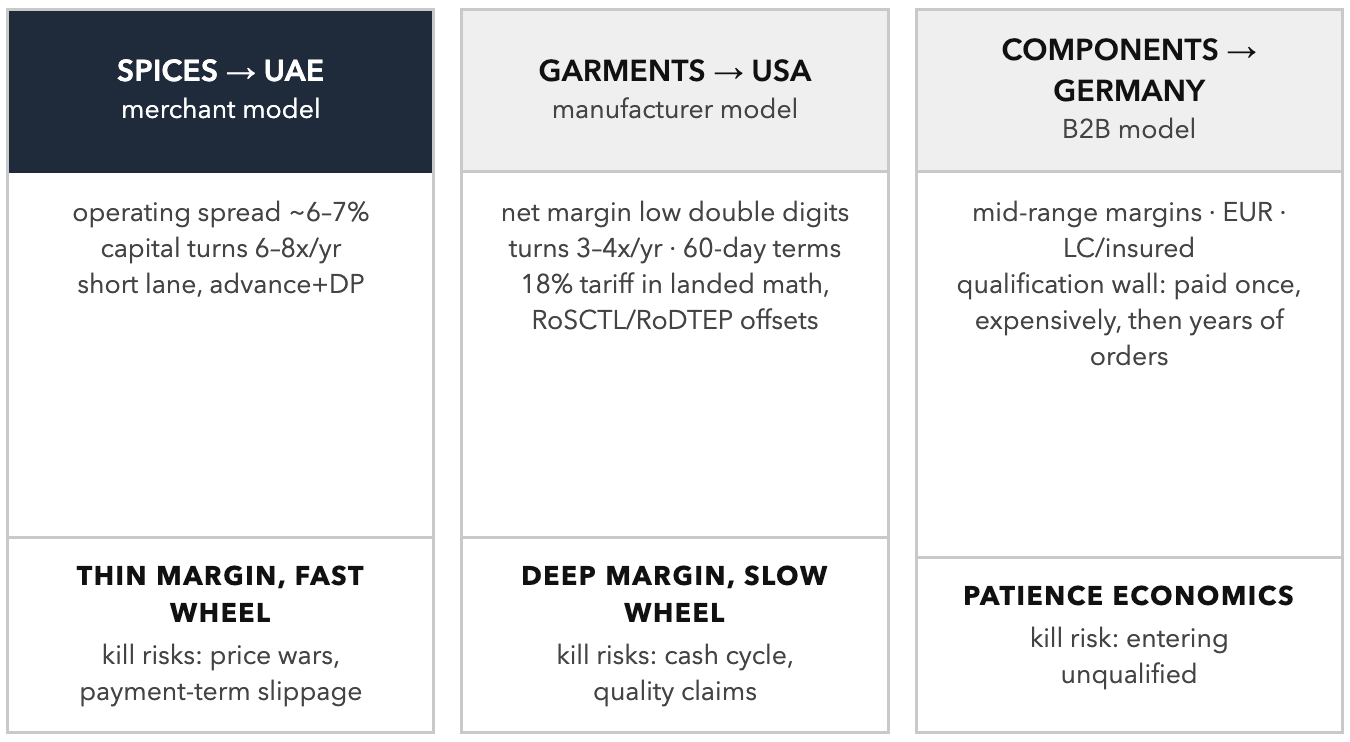
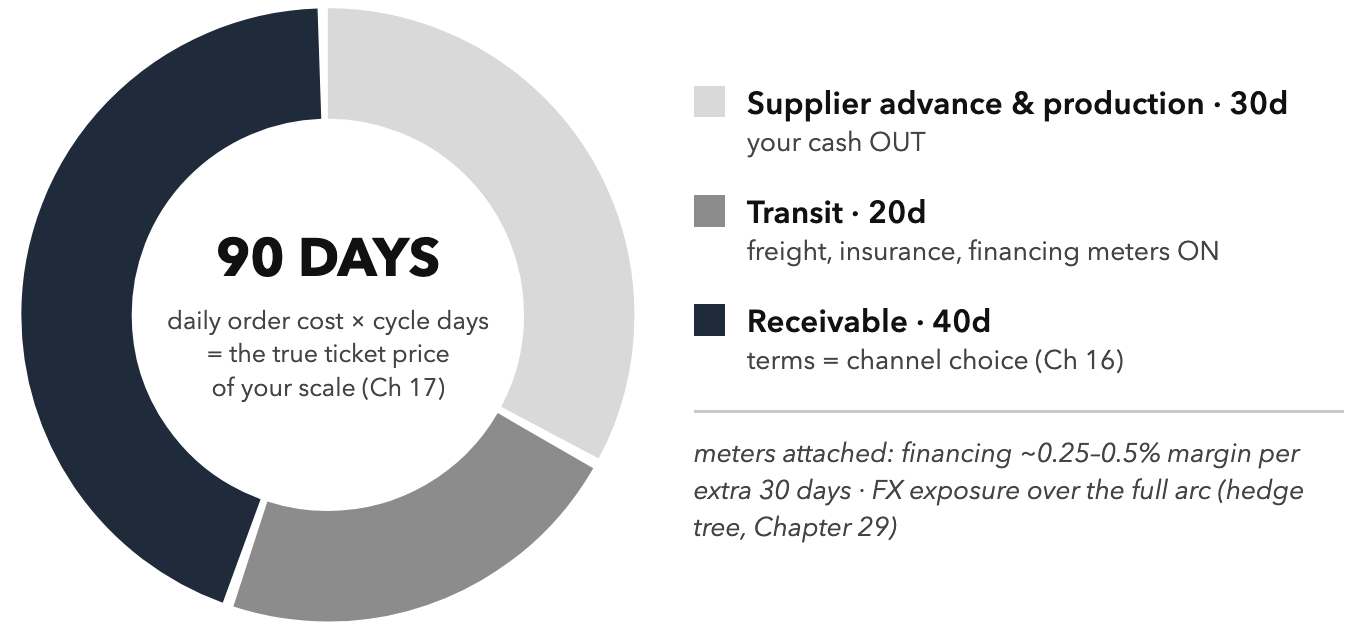
What does a shipment cost by the time it reaches a foreign shelf, and is a business left in the buyer's price? It is for exporters pricing a first quote and importers weighing a product from abroad. It follows cost up a ladder from factory gate to foreign shelf, then argues that a price has to be worked out from the buyer's side of the border, not built up from the factory floor. Worked examples run from Korean skincare and Foshan sofas coming into India to turmeric bound for Singapore and a spiced snack bound for Britain, showing where duty dominates and where the sales channel takes most of the climb. It then sets three business models side by side, the spice merchant, the garment manufacturer and the engineering supplier, to show how the same arithmetic yields very different margins, risks and speeds of cash. It closes on the capital each scale of trading demands. Afterwards you can judge whether a buyer's price leaves room for your business before you agree to it.
Key ideas
- On a lane covered by a trade agreement, an exporter's price climb is mostly channel rather than tariff: turmeric bound for Singapore nearly triples on the way to the shelf without a rupee of customs duty.
- India's import duty looks worse on paper than in a reseller's accounts, since a large part of it is refunded as tax credit and only the customs charge itself is truly lost.
- A thin spread can make a sound business and a wide one a fragile business, because what a trading model earns in a year depends as much on how often its capital comes home as on its margin per order.
Tools and templates
Cartel Costing Sheet
XLSX · 8 KB
Landed Cost Calculator
XLSX · 7 KB
Working Capital Simulator
XLSX · 7 KB
Distributor Margin Stack
XLSX · 7 KB