Part II · Chapter 16
Distribution Channels
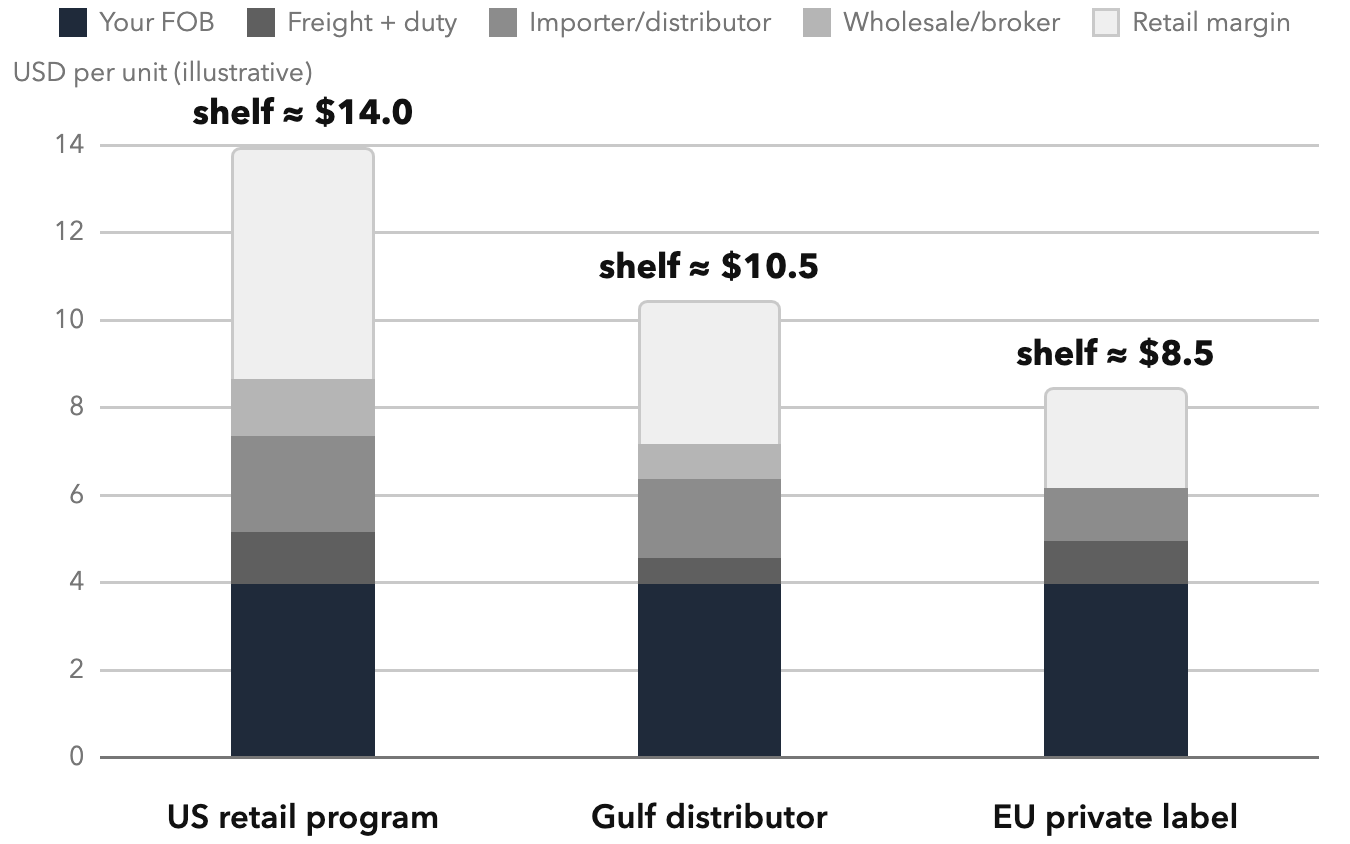
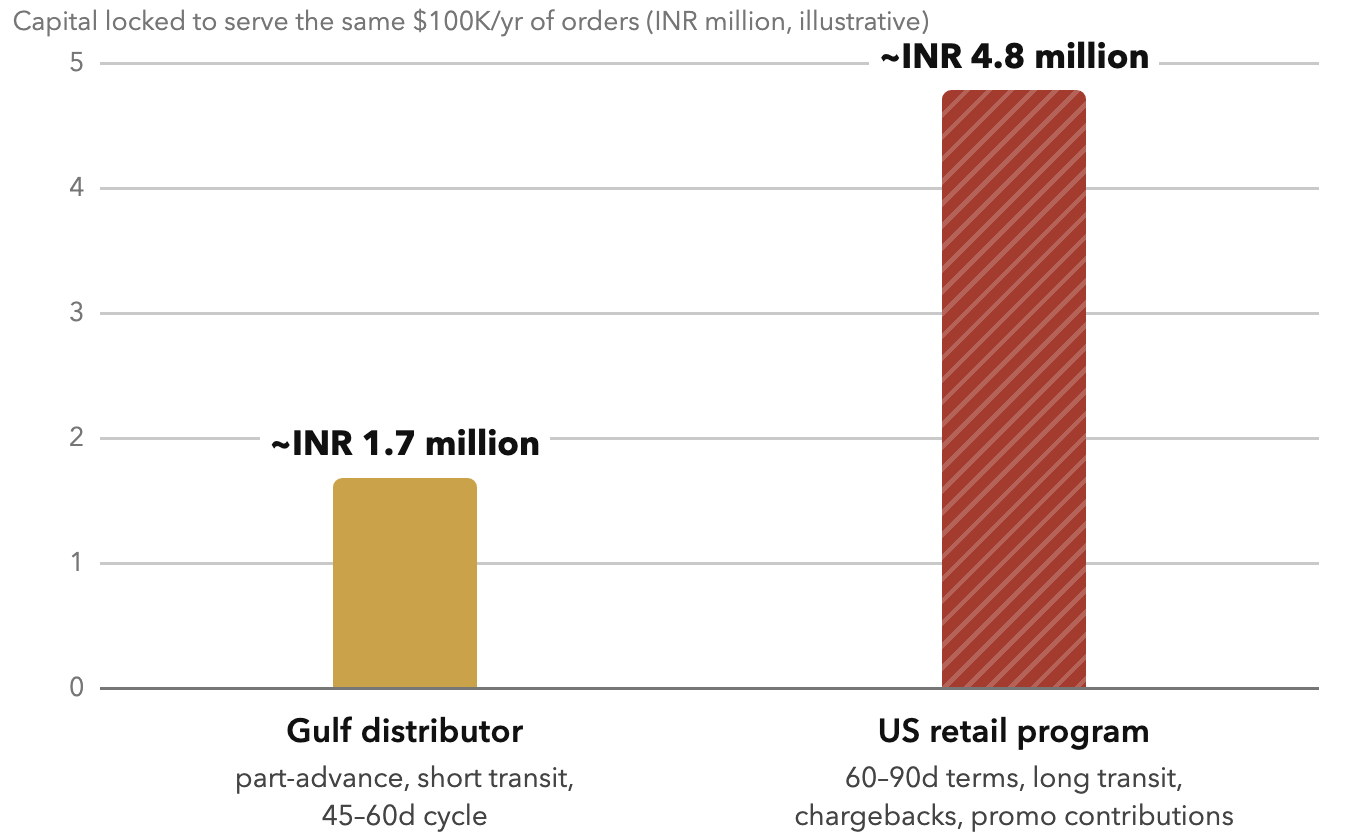
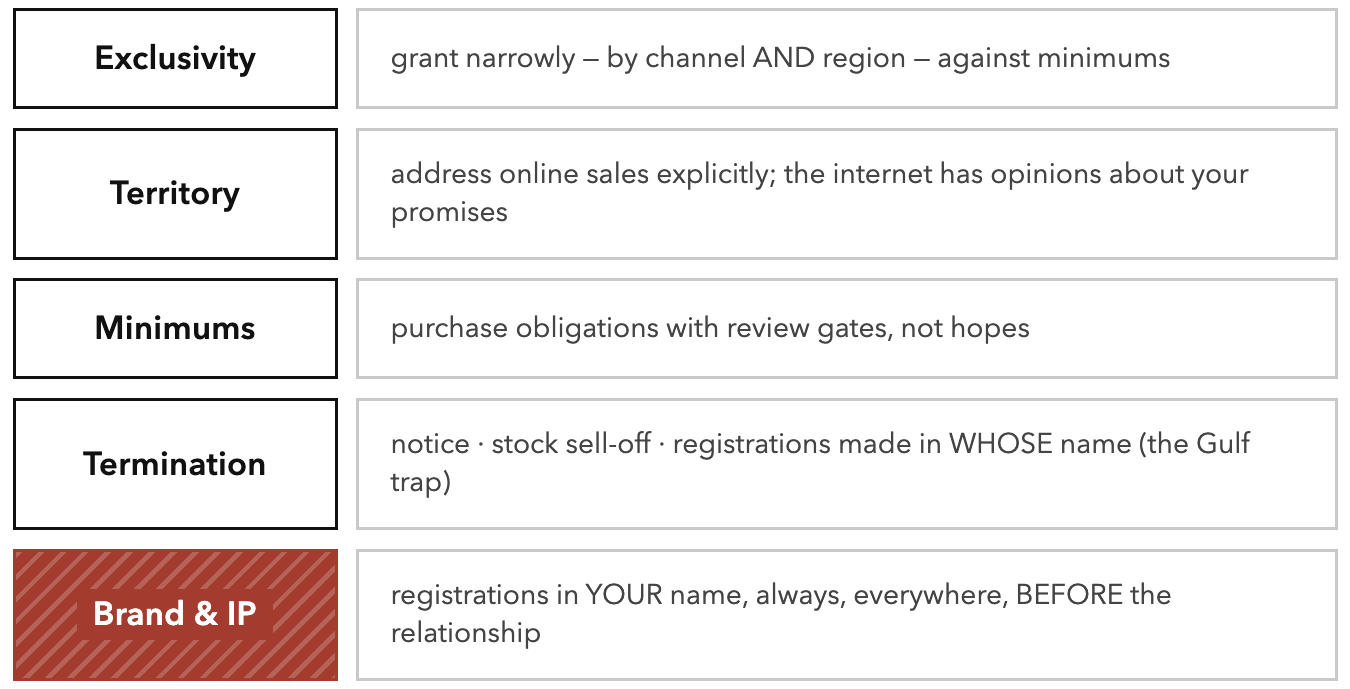
Why does something priced modestly at your gate cost several times as much on a foreign shelf, and how do you choose the hands it passes through? This chapter is for exporters picking their first distributor or retail route, and for those already tied to one that has stopped working. It opens with a Gulf agreement that left an exporter unable to sell his own brand, then traces the cut each layer takes, from importer and wholesaler to retailer, hotel trade and online marketplace. A tour of markets shows how the chain changes shape in America, Europe, the Gulf, Africa, East and South-East Asia, Australia and Latin America, with a carpet exporter's view on which kind of market to enter first. It then shows how equal sales can tie up very different sums of cash by channel, how consignment and chargebacks bite, and how to find, vet, appoint and keep a partner. Afterwards you can judge a distribution offer by what it takes from you as well as what it pays, and keep the power to walk away.
Key ideas
- The closer a channel sits to the shopper, the more cash it holds back, through long credit, listing fees and automatic deductions for paperwork slips, so equal sales can tie up very different sums.
- Channels are best entered in an order that builds proof: forgiving outlets first, and the retail programmes that lock up capital only once sales data exists.
- An exporter's freedom to leave a distributor is an asset worth bargaining for, and it is secured by registrations in his own name rather than by the partner's goodwill.
Tools and templates
Working Capital Simulator
XLSX · 7 KB
Distributor Margin Stack
XLSX · 7 KB