Part II · Chapter 15
The Buyer-Hunting Playbook
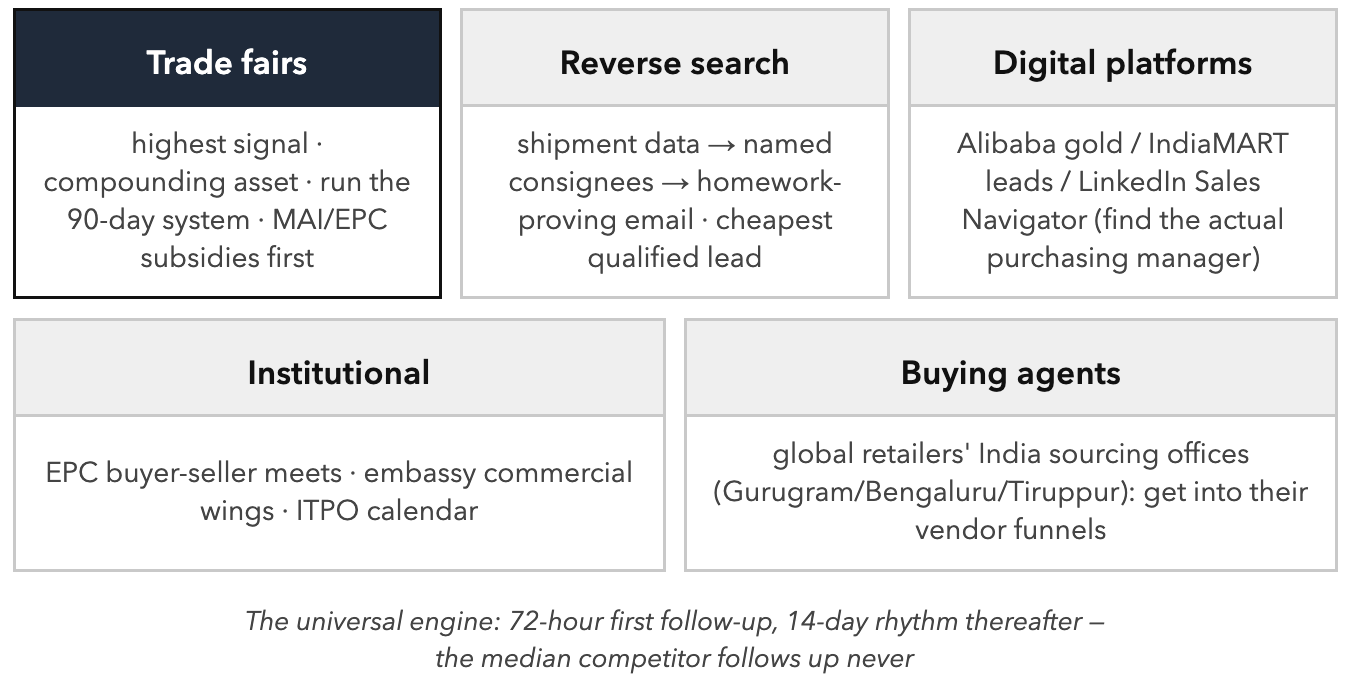
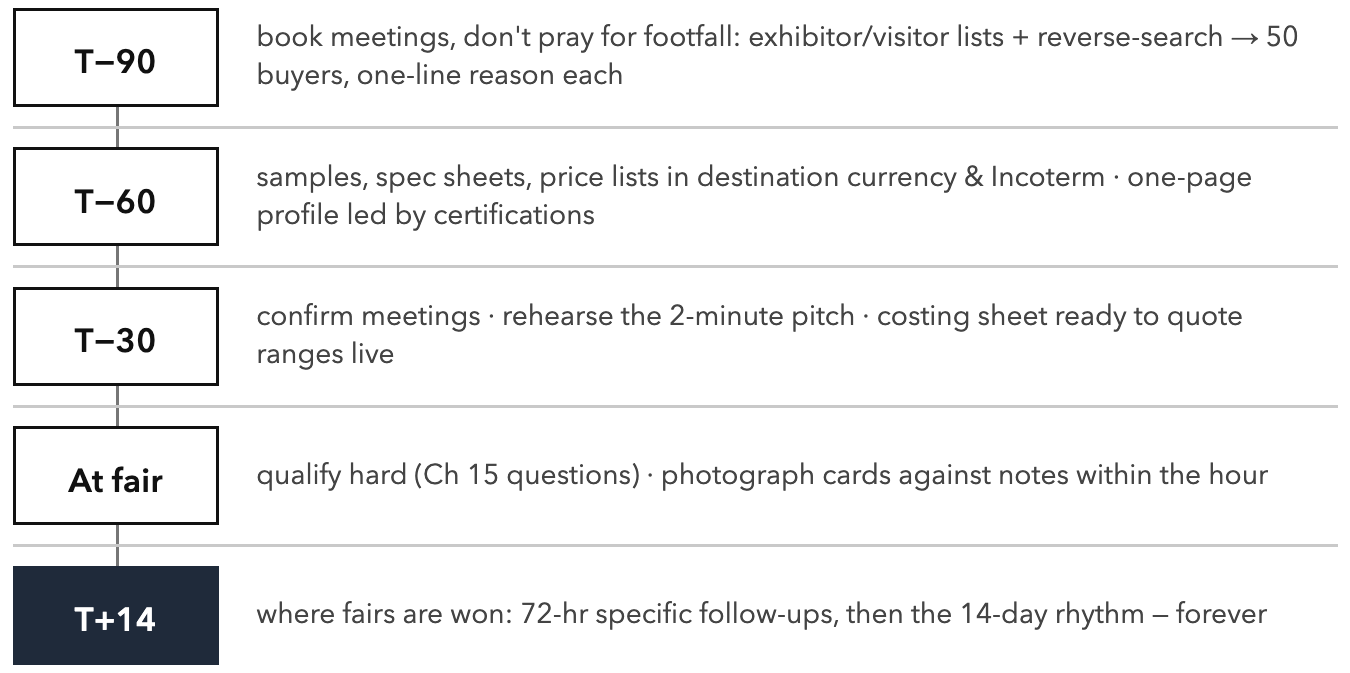
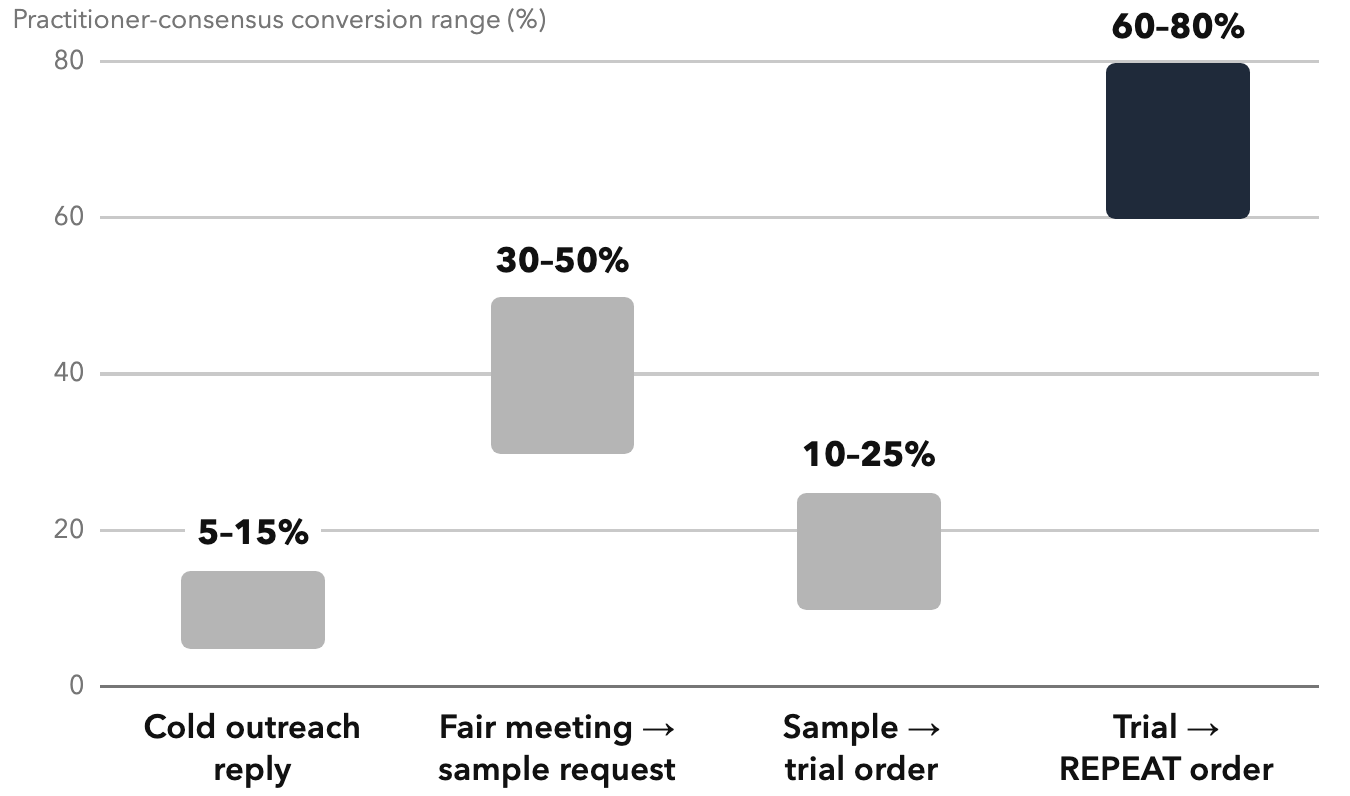
Where do real overseas buyers come from, if not from the databases sold online? This chapter is for exporters who have tried a bought list and heard nothing back, and for manufacturers preparing for their first fair. It begins with a Moradabad brassware maker whose emails vanished among hundreds of identical ones, then lays out the honest channels that do work. Trade fairs come first, with a guide to which shows matter by category, what a booth costs, and a timeline that starts three months before the event and runs well past it. Public customs records follow, showing who imports your product and from whom. The chapter then weighs the brokered routes, from digital platforms and the government's buyer-seller circuit to the sourcing offices that large retailers keep in India, by asking who pays the middleman. It ends with three short emails and working ranges for how often each stage converts. Afterwards you can judge which channel deserves your time and money in your category, and what return to expect from it.
Key ideas
- A trade fair pays off slowly and mostly after the event, through prompt follow-up and a return to the same hall the next year, so its cost is best judged over two editions.
- A buyer's own import records make the most persuasive opening an exporter has, since they turn a cold approach into a conversation about a supply line the buyer already runs.
- Every intermediary serves whoever pays him, so a brokered channel's value to an exporter depends on which side of the deal funds it.
Tools and templates
Scheme Selector
XLSX · 8 KB
Templates
Buyer Outreach Emails
DOCX · 12 KB