Part II · Chapter 19
Closing – Negotiation, Samples, and the First Order
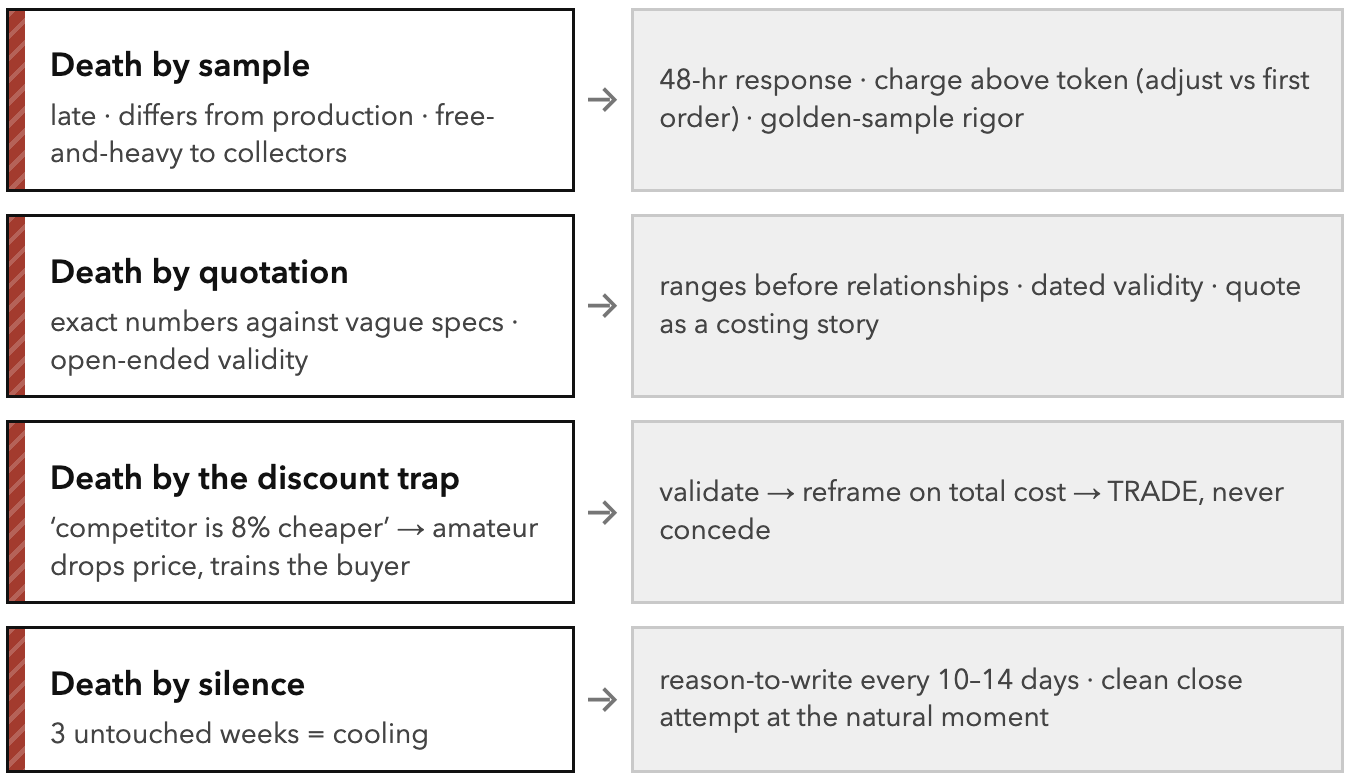
How does a promising enquiry become a signed first order, and then a second? This chapter is for exporters who have found interested buyers and keep losing them somewhere between the sample and the contract. It opens with a pottery workshop that won a German buyer with its finest work, delivered its ordinary work, and never heard from him again. From there it traces the four places deals usually die: the sample, the quotation, the demand for a discount, and the silence that follows a proposal. It shows how buyers in Germany and Japan, the United States, the Gulf, Africa and Latin America, and China and South-East Asia each bargain over something different, and why resistance on price often hides a worry about something else. It ends with the moves that carry a cautious buyer over the line, every one of which lowers the risk he is taking. Afterwards you can judge what a hesitant buyer is really asking for, and answer it with certainty rather than a lower price.
Key ideas
- Speed is part of what a sample shows: a buyer comparing several factories at once reads reliability from the first promised date, long before any goods are made.
- Showing the cost build-up behind a price turns haggling into a discussion of specific lines, which protects the total better than defending a single figure.
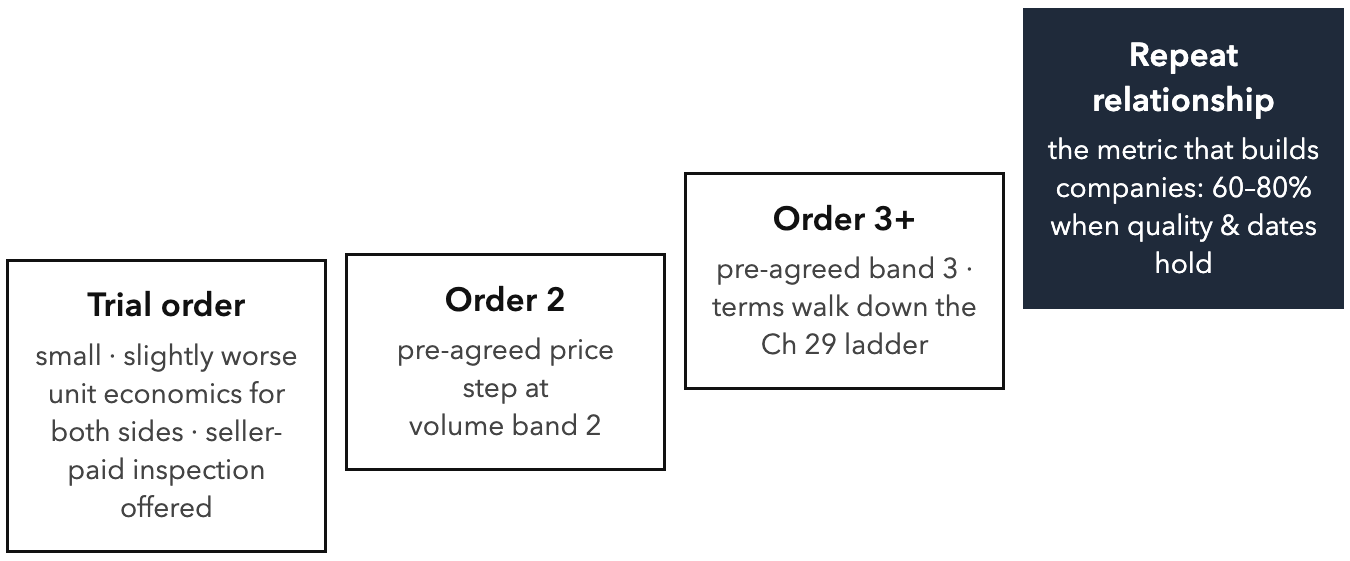
- At the first order a buyer is weighing what could go wrong more than what the goods cost, so an inspection the seller pays for, a staged order plan and a live look at the factory floor do more to close the deal than a discount.
Tools and templates
Templates
Quotation
DOCX · 9 KB