Part III · Chapter 28
Customs and Documentation
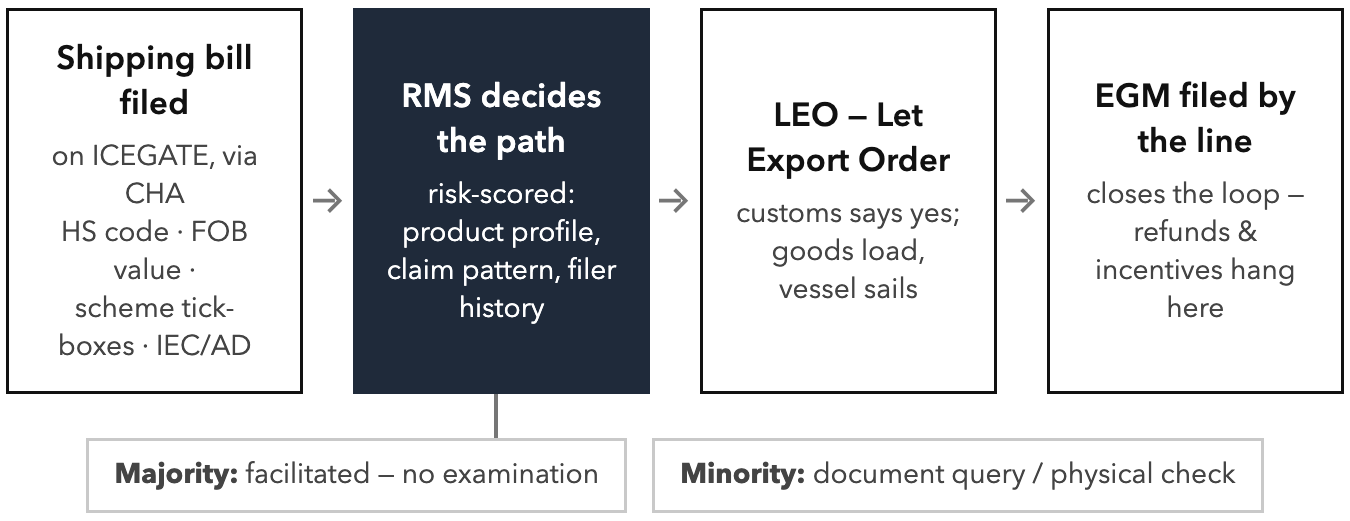
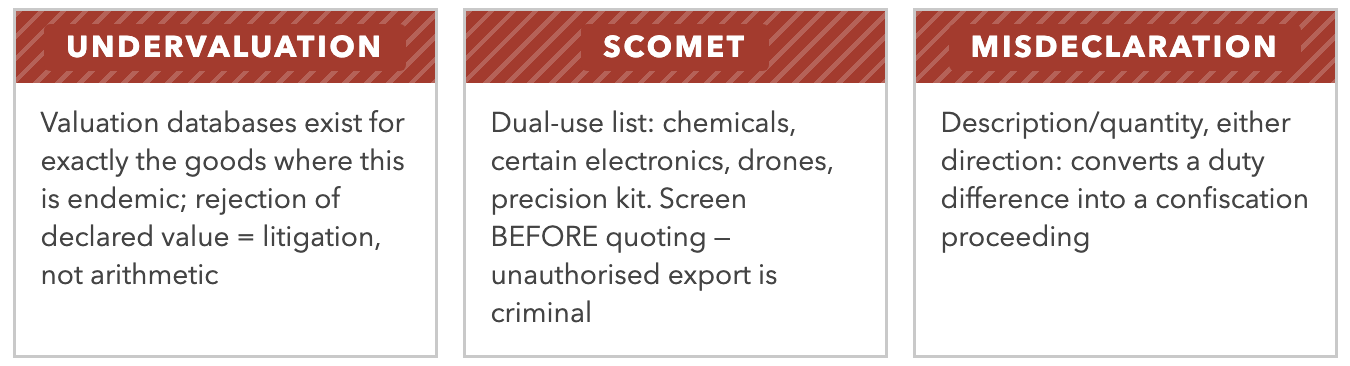
Where does a shipment actually get stuck on its way through Indian customs, and what keeps it moving? This chapter is for traders clearing their first consignments in either direction. It opens on a Delhi importer whose margin vanished not to duty but to storage charges, because a routine question sat unanswered while her free days ran out. The chapter argues that modern clearance is largely electronic and risk-based, so what usually hurts a careful trader is delay rather than suspicion. It follows exports and imports in turn, the quieter quarantine gate that regulated goods must also pass, and the few kinds of conduct the system will not forgive. The second half treats trade paperwork as a linked sequence fed from one master record, and shows why consistency across the set, more than any single form, decides whether you clear and get paid. Afterwards you can take a shipment through customs knowing where its clocks run and what its paperwork must prove.
Key ideas
- At the port, time is often dearer than tax: an unanswered query costs nothing in itself, yet the storage meters it leaves running can eat a whole order's margin.
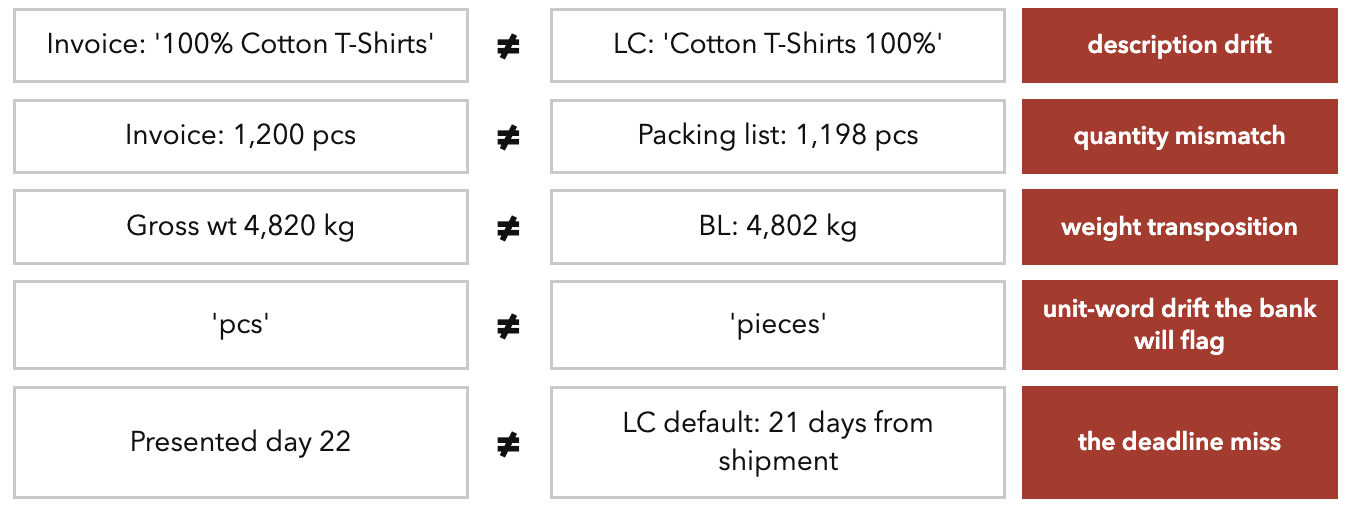
- Paperwork fails as a set rather than form by form, so the discipline that matters is one master record feeding every document, not care over any single page.
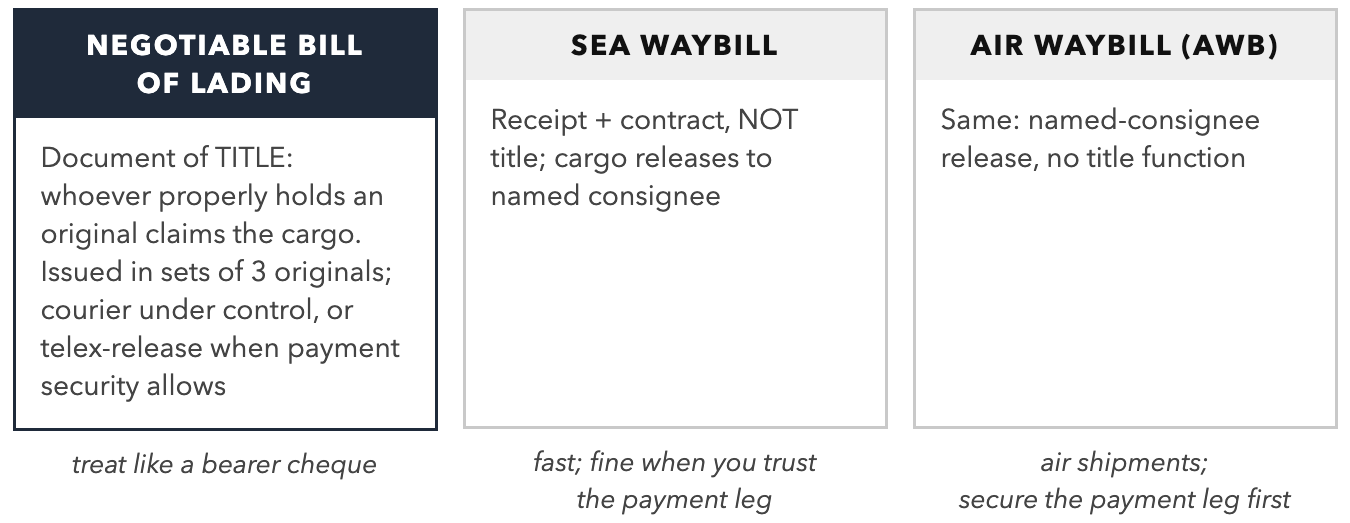
- Only a negotiable bill of lading makes the cargo itself a security, which is why choosing it over a waybill is really a decision about how far the seller trusts the buyer to pay.
Tools and templates
Landed Cost Calculator
XLSX · 7 KB
Import from China
XLSX · 11 KB
Templates
Master Data Sheet
DOCX · 9 KB
Quotation
DOCX · 9 KB
Proforma Invoice
DOCX · 9 KB
Purchase Order
DOCX · 9 KB
Sales Contract Key Terms
DOCX · 9 KB
Commercial Invoice
DOCX · 9 KB
Packing List
DOCX · 9 KB
Shipping Bill Field Prep
DOCX · 9 KB
BL Instructions to Forwarder
DOCX · 9 KB
CoO Application Prep
DOCX · 9 KB
Inspection Request
DOCX · 9 KB
Insurance Declaration
DOCX · 9 KB
Distributor Term Sheet
DOCX · 9 KB
Buyer Verification Protocol
DOCX · 9 KB
Buyer Outreach Emails
DOCX · 12 KB
Filled specimens (14)
Master Data Sheet (specimen)
PNG · 324 KB
Quotation (specimen)
PNG · 222 KB
Proforma Invoice (specimen)
PNG · 238 KB
Purchase Order (specimen)
PNG · 231 KB
Sales Contract (specimen)
PNG · 291 KB
Commercial Invoice (specimen)
PNG · 255 KB
Packing List (specimen)
PNG · 227 KB
Shipping Bill (specimen)
PNG · 218 KB
Bill of Lading (specimen)
PNG · 252 KB
Certificate of Origin, non-preferential (specimen)
PNG · 211 KB
Certificate of Origin, preferential (specimen)
PNG · 217 KB
Pre-Shipment Inspection (specimen)
PNG · 181 KB
Marine Insurance Certificate (specimen)
PNG · 239 KB
Fumigation Certificate (specimen)
PNG · 176 KB