Part II · Chapter 22
Importing Into India
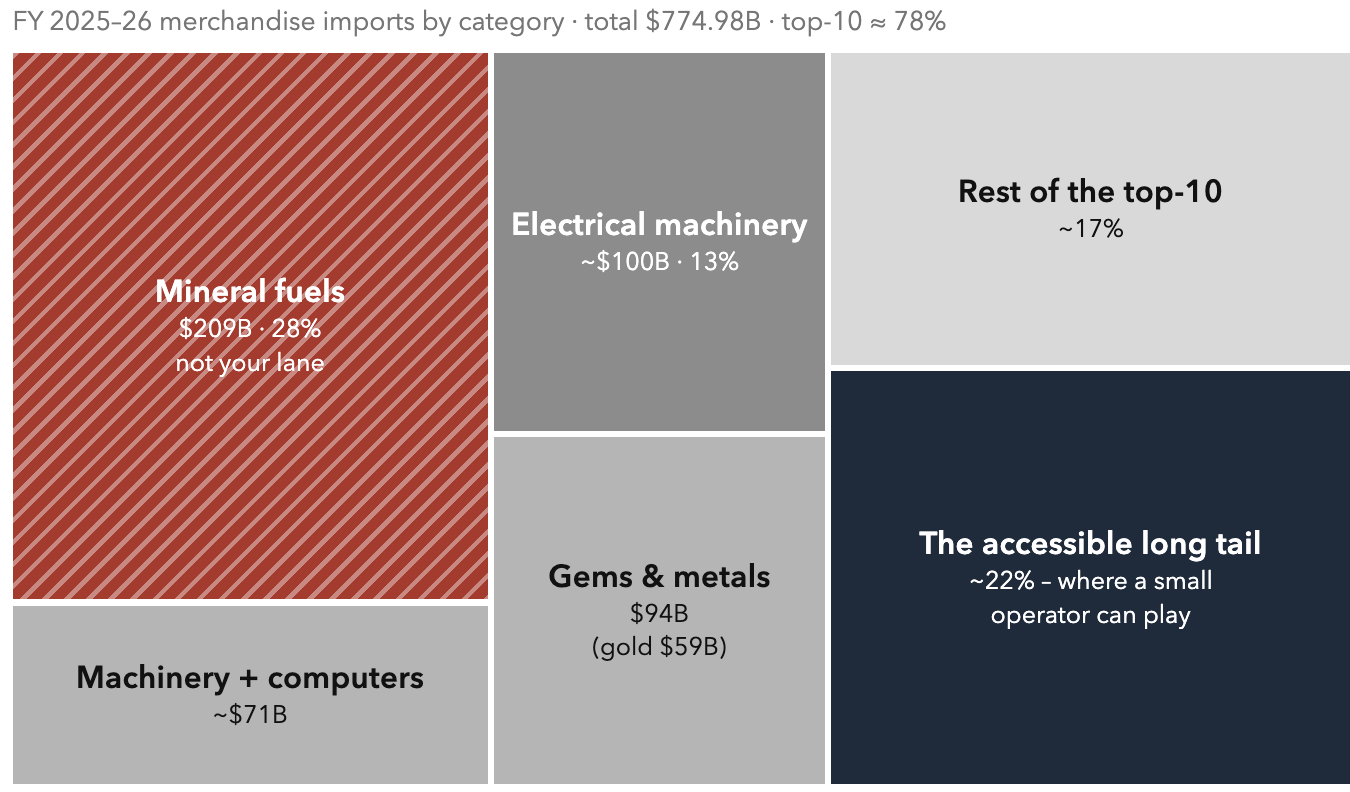
What does India buy from the world that a small operator could bring in, and how does he earn from it? This chapter is for traders, retailers and founders who notice a foreign product missing from Indian shelves and wonder whether to bring it in. It starts from the refrigerator of an affluent home, full of fruit and cosmetics that were not sold here a decade ago, and sorts the national import bill into the heavy categories no independent can enter and the narrower ones he can. It then works through the main ways to earn: imported produce and the plant-variety rights that guard some of it, a Korean beauty brand built on a foreign formula, a storefront that distributes famous names, sole distribution of a specialist foreign machine, and a food format already proven abroad. It closes on the operating sequence, a toothbrush brand's supplier negotiation, and a classification shortcut that is customs fraud. Afterwards you can judge which kind of import business suits your skills and capital, and which bargains to walk away from.
Key ideas
- Distributing a foreign brand builds value its owner can take back, so the importer's safer path treats distribution as paid research into what Indian buyers want before launching a brand of his own.
- A foreign machine maker too small to open an Indian office is choosing a custodian for its reputation rather than a trader, so trained service engineers, spares and demo stock count for as much as access to its customers.
- Whatever is imported, a product or a restaurant concept, its novelty is soon copied, so an importer's lasting advantage is an audience already willing to buy from him.
Tools and templates
Landed Cost Calculator
XLSX · 7 KB
Import from China
XLSX · 11 KB