Part III · Chapter 27
Moving the Box
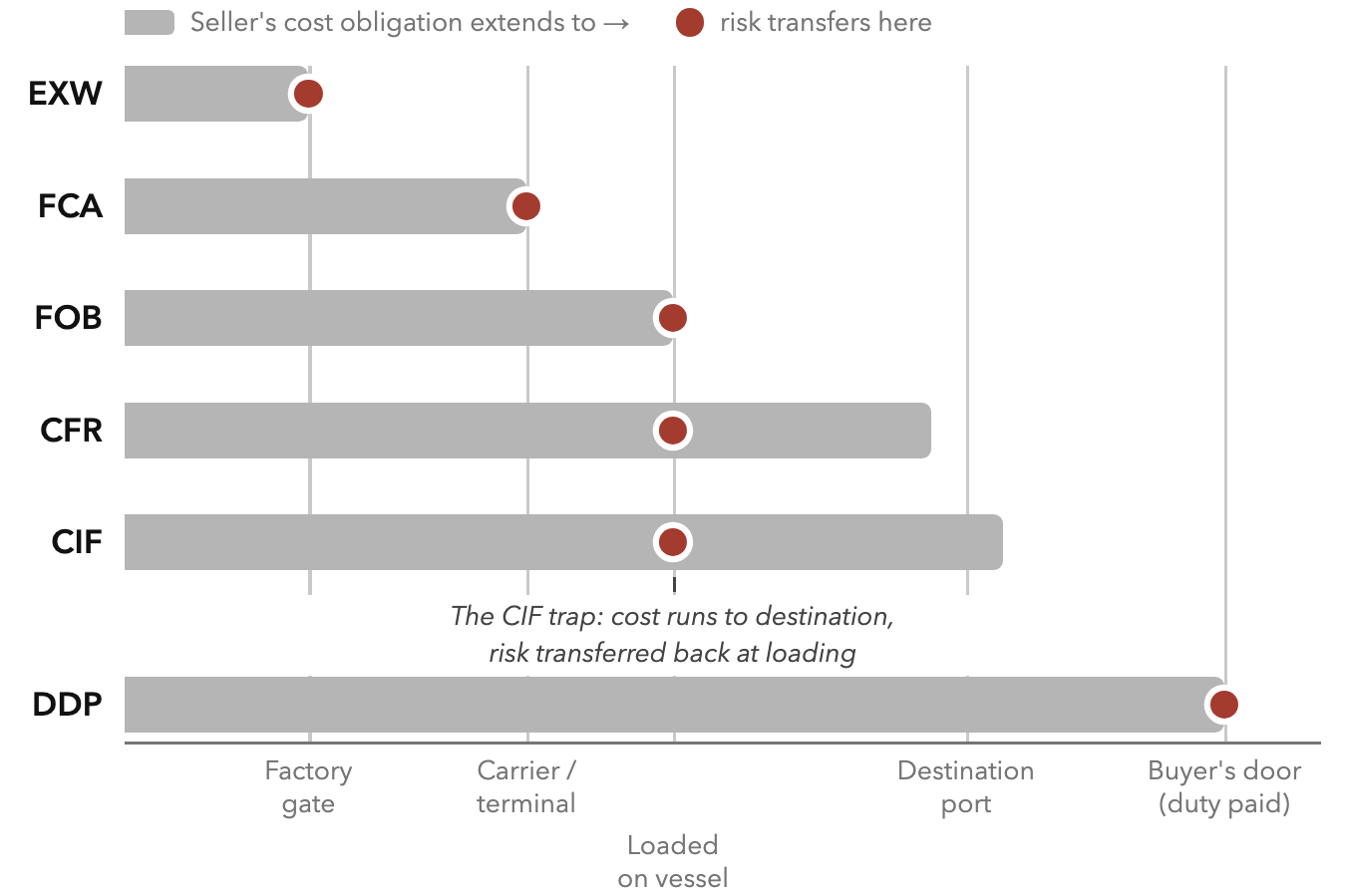
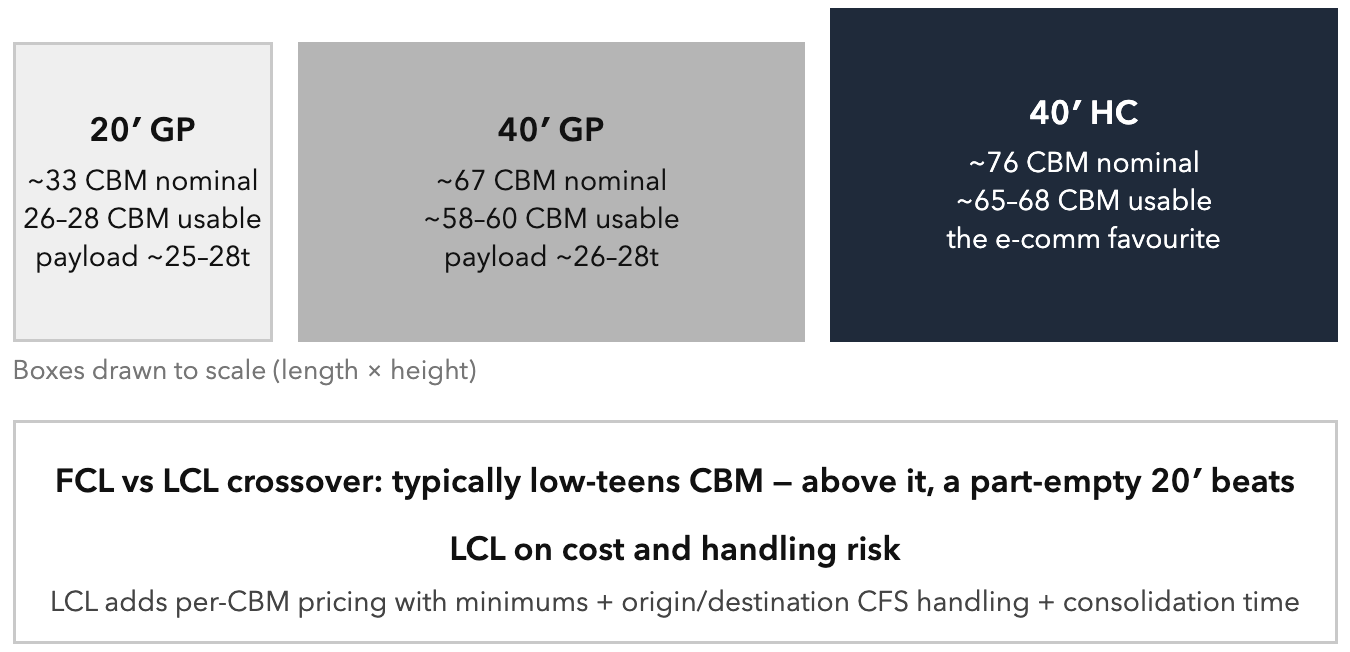
Once a buyer says yes, who pays for each leg of the trip, who carries the loss if something goes wrong at sea, and what are you really buying when you book a container? This chapter is for exporters arranging first shipments and anyone who has signed a trade term without knowing what it meant. It opens on an exporter who agreed to ship on insurance-and-freight terms and still bore the loss of a damaged cargo, while paying its freight as well. From that story it draws the central idea: cost and risk change hands at different points, and the trade terms in common use are a dictionary for where. The rest of the chapter is about buying freight well: who touches your cargo and what each party earns, why a whole box can be cheaper per unit than a shared one, how a freight bill is built in layers, and what must happen before a ship sails. Afterwards you can read any shipment, from contract term to freight bill, and say where your cost and your risk end.
Key ideas
- Paying for a leg of the trip and being exposed on it are separate obligations, and the most popular landed-price terms split them at the Indian port.
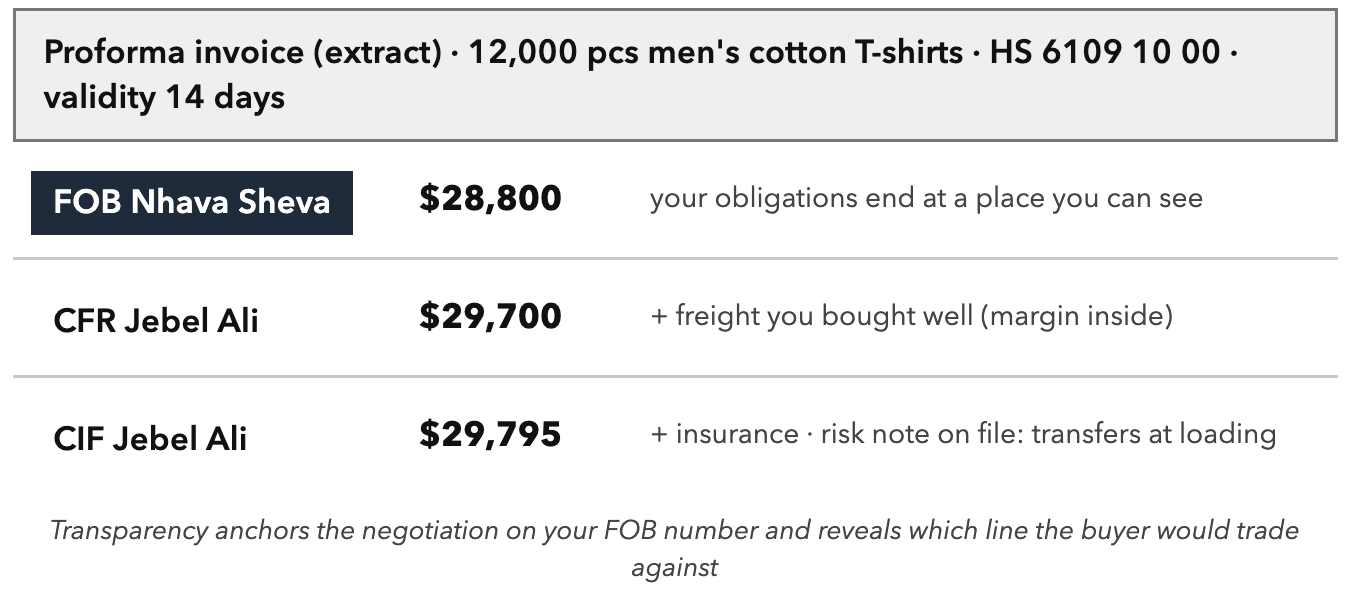
- A quote in several terms turns freight from a hidden cost into something the buyer chooses to buy from the seller, while the bargaining stays fixed on the port price.
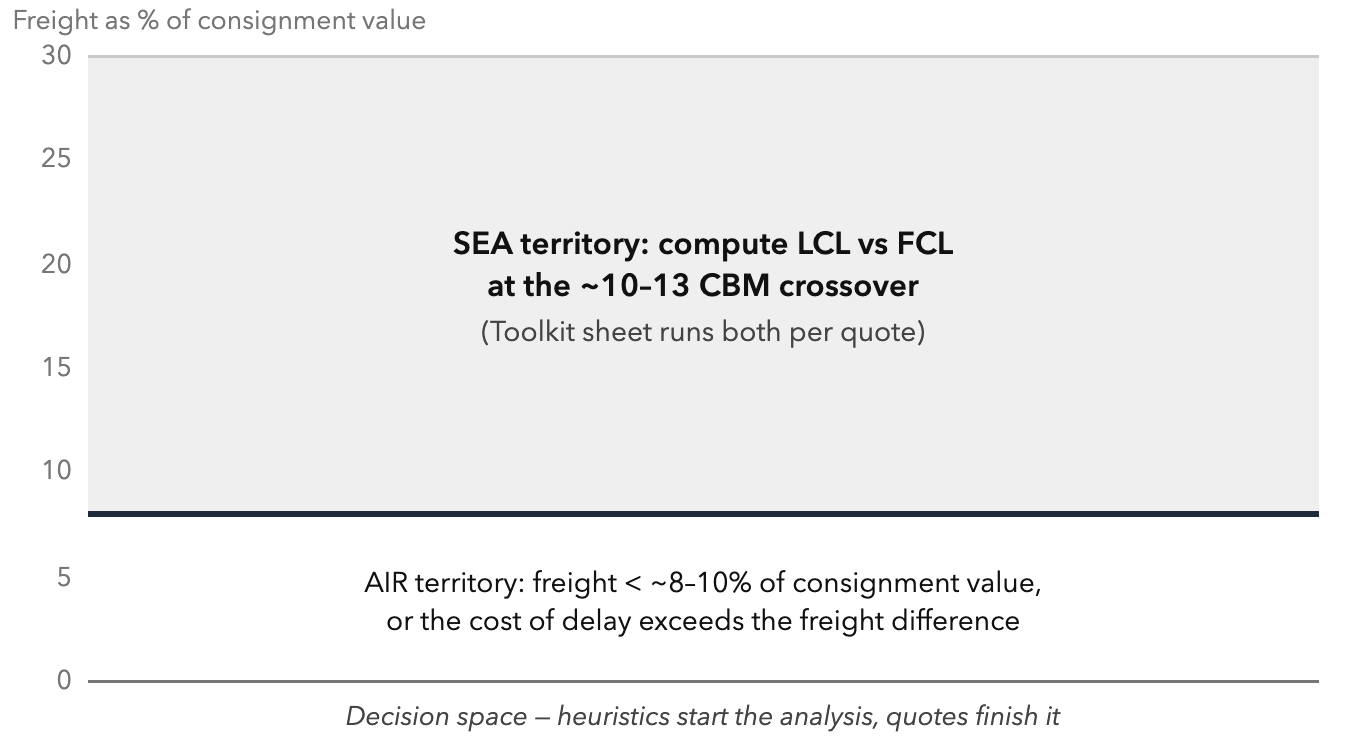
- A low headline ocean rate says little about what a shipment will cost, because port fees, seasonal surcharges and charges at the destination can outweigh it.