Part III · Chapter 32
Running the Machine
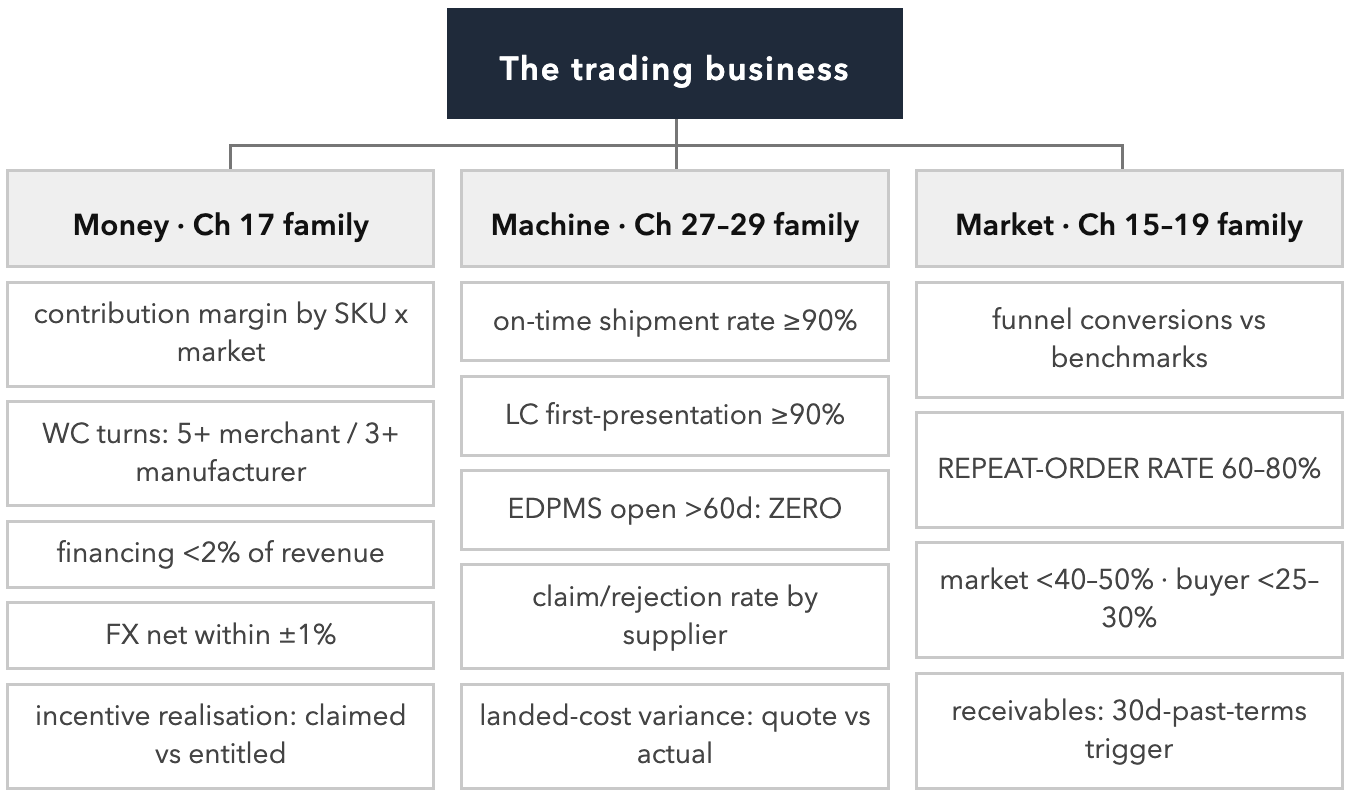
How does a trading operation that runs on instinct turn into one that runs on systems, and what should its first year actually look like? This chapter is for operators who have shipped often enough to lose track of what each product earns, and for founders who want the whole book turned into a plan. It treats the supply chain as a few standing choices that are best settled on purpose before events settle them, and it argues that a growing firm needs a small set of measured signals, each paired with a response agreed in advance. The centrepiece is a year-long plan that places the machinery of every earlier chapter in dated order and names what usually goes wrong at each stage. Its logic is that a business is proved only when a buyer returns, so every earlier step is sized to be survivable rather than profitable. Afterwards you can turn the whole book into a dated year of action and know, by its close, whether the trade has become a business.
Key ideas
- What a young trading firm should watch most closely changes as it grows: clean shipping and paperwork in its first year, margins and capital turns by its third, with demand signals deciding whether it lasts.
- Records of which batch went into which carton are turning from a regulatory burden into a selling point, and an exporter who designs them early keeps control of how they work.
- A trading firm's lasting asset is its records, not its facilities, because almost every operating capability can be hired as volume justifies while its history of buyers, costs and shipments cannot.
Tools and templates
Working Capital Simulator
XLSX · 7 KB
LC Checklist
XLSX · 7 KB
Monday Dashboard
XLSX · 8 KB
365 Day Tracker
XLSX · 8 KB
Templates
Master Data Sheet
DOCX · 9 KB
Buyer Verification Protocol
DOCX · 9 KB