Part I · Chapter 5
China, Japan & Korea
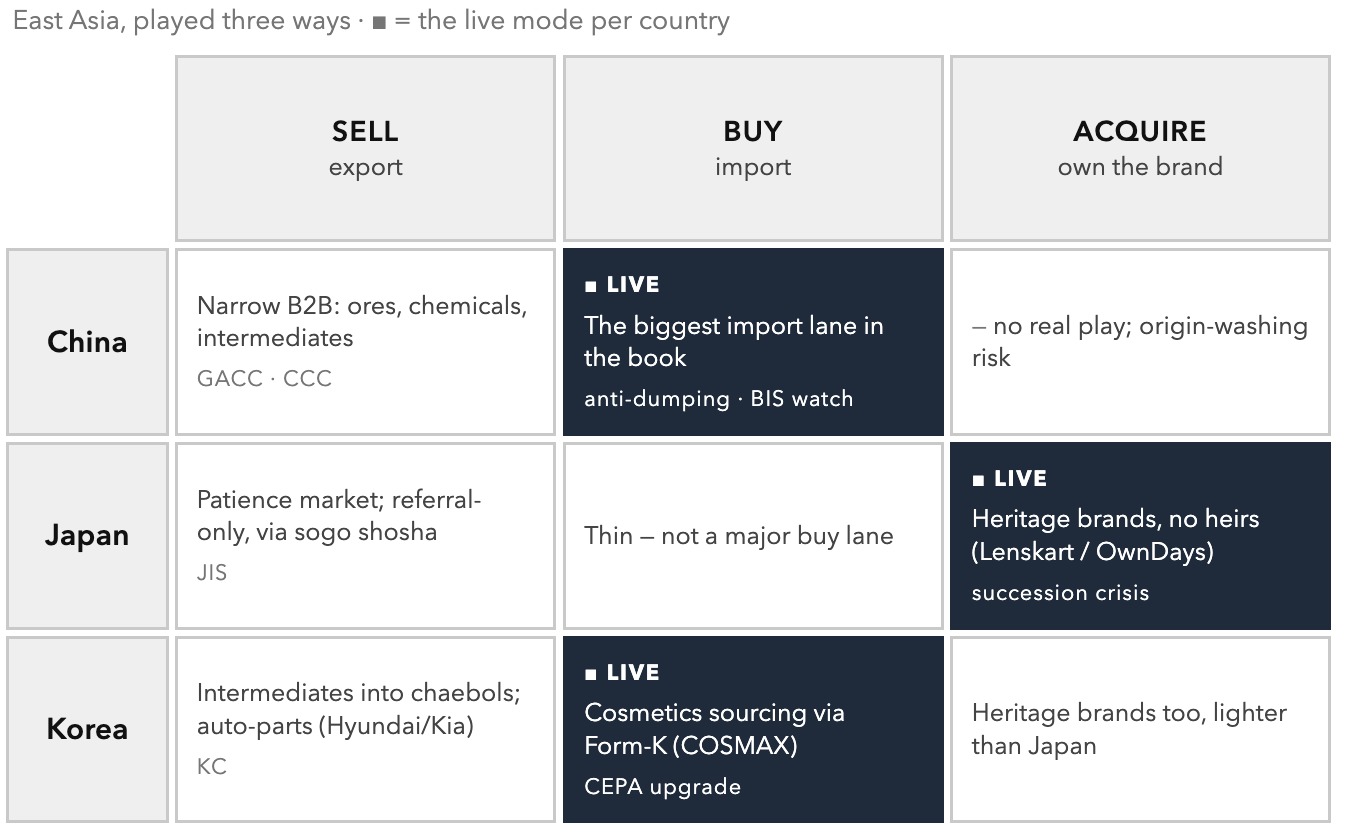
How should an Indian business deal with East Asia's three industrial powers, which make so many of the inputs Indian industry depends on yet buy comparatively little back? This chapter is for exporters weighing these markets, importers who already depend on Chinese inputs, and founders curious about taking a stake in an Asian business. It explains how each country's recent history shapes its business manners, then sets out three ways to engage: selling to the region, buying from it, and owning a piece of it. China comes through as a narrow market for raw materials and intermediates, reached through importers and trading houses, and as India's biggest source of imports, watched closely by Indian trade-remedy and standards rules. Japan is a slow, referral-only market that rewards patience with loyal, prompt-paying customers. Korea moves faster, and in cosmetics its value to Indian brands lies largely in what can be sourced there. Afterwards you can decide which role, whether seller, buyer or owner, best fits your business in each of the three countries.
Key ideas
- Small Indian firms rarely win East Asia's headline plays, but they can profit from its companies' need for a trusted operator in India, as representatives or as managers of a joint venture.
- China's reopening to Indian business is selective and reversible, so any plan that depends on Chinese inputs or partners has to survive a renewed cooling.
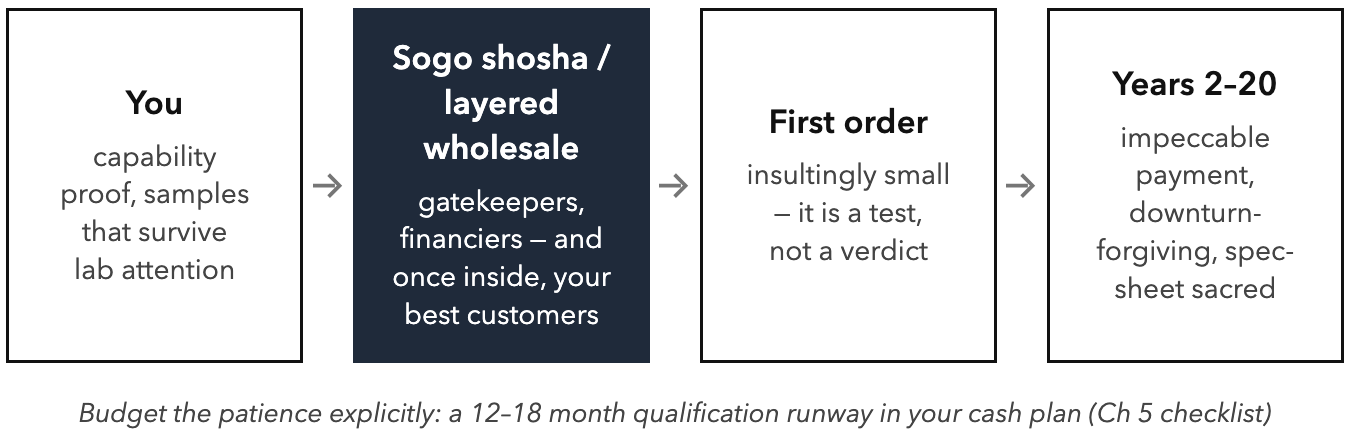
- In Japan trust is borrowed before it is earned: a cold approach carries no weight, so the way to a buyer runs through someone who vouches for you and a long courtship after that.
Tools and templates
Import from China
XLSX · 11 KB